
What Do Jehovah’s Witnesses Believe?
| Key Takeaways |
| Jehovah’s Witnesses reject the Trinity and hold that only Jehovah, not Jesus, is the one true God. |
| Jehovah’s Witnesses teach that Jesus was Jehovah’s first creation, identified as Michael the Archangel before his human birth. |
| The Watch Tower Governing Body, not personal Bible reading alone, functions as the required interpretive authority for Jehovah’s Witnesses. |
| Jehovah’s Witnesses believe humans have no inherently immortal soul, so the wicked are annihilated rather than punished eternally in hell. |
| Salvation for Jehovah’s Witnesses splits between a 144,000-member heavenly “anointed class” and a larger earthly-paradise hope for “other sheep.” |
| Islam’s doctrine of Tawhid affirms Allah’s absolute oneness in essence, worship, and names, with no created being ever sharing His divine nature. |
Jehovah’s Witnesses believe in one supreme God they call Jehovah, deny the Trinity, and hold that Jesus Christ is a created being — Jehovah’s first and greatest creation — rather than God incarnate.
This distinction shapes nearly everything else in their theology: how they read the Bible, what they expect of the afterlife, and why they knock on doors carrying a message of urgent restoration.
What Do Jehovah’s Witnesses Believe?
Jehovah’s Witnesses believe in a God they call Jehovah, the rejection of the Trinity, Jesus as a created angelic being rather than God, the Holy Spirit as an impersonal force, no inherent immortality of the soul, and a restored earthly paradise governed from heaven by 144,000 chosen believers. Their faith developed from the nineteenth-century Bible Student movement founded by Charles Taze Russell and is now directed by the Watch Tower Bible and Tract Society’s Governing Body, based in Warwick, New York.
Jehovah’s Witnesses reject core beliefs that most Christian denominations — Catholic, Orthodox, and Protestant alike — hold as essential: the Trinity, the eternal deity of Christ, and the personhood of the Holy Spirit. Their theology is closer to a distinct doctrinal system built on a particular reading of scripture than a variant branch of mainstream Christianity.
1. Jehovah’s Witnesses Reject the Trinity and the Deity of Jesus
The single most defining feature of Jehovah’s Witness theology is the total rejection of the Trinity. Where mainstream Christianity holds that Father, Son, and Holy Spirit are three coequal, coeternal persons in one divine essence, Jehovah’s Witnesses hold that only Jehovah is truly God — supreme, uncreated, and eternal.
Jesus, in their theology, is Jehovah’s first creation: a spirit being who existed in heaven before his earthly birth and who is commonly identified with Michael the Archangel.
He is honored as God’s unique Son and as the one through whom Jehovah created everything else, but he is explicitly not equal to Jehovah, not co-eternal with him, and not to be worshipped as God.
The Holy Spirit, in turn, is not treated as a person at all but as Jehovah’s impersonal “active force” — comparable to electricity or wind, something God uses rather than someone who exists as a distinct divine person.
Because the word “Trinity” never appears in the Bible text, Witnesses argue the doctrine was a later theological invention rather than an original apostolic teaching.
2. The Watch Tower Governing Body Interprets Scripture for Witnesses
Jehovah’s Witnesses affirm that the Bible alone is God’s inspired word, but they simultaneously teach that ordinary believers cannot arrive at correct doctrine simply by reading it independently.
The Watch Tower Bible and Tract Society, and specifically its Governing Body of elders headquartered in Warwick, New York, functions as the required channel of biblical interpretation.
Doctrinal decisions are made centrally and disseminated through The Watchtower magazine, congregation meetings, and conventions — and members are expected to accept these interpretations as authoritative “new light” from God, even when a teaching changes from what was taught before.
This is why Witnesses use their own translation, the New World Translation, produced by the Society itself, rather than a mainstream Bible translation used across other Christian traditions.
3. Jehovah’s Witnesses Deny an Immortal Soul and Eternal Hell
Where most religious traditions teach that every human possesses an immortal soul destined for eternal reward or punishment, Jehovah’s Witnesses reject this outright. They hold that the “soul” simply refers to the whole living person, not a separate immaterial part that survives death independently.
Consequently, they reject hell as a place of ongoing conscious torment. In their theology, “hell” refers to the common grave of humanity — unconsciousness, not suffering.
The wicked, rather than being punished eternally, are understood to be annihilated: extinguished from existence permanently, with no ongoing awareness at all.
Death, for the unrighteous who are not later resurrected, is final non-existence rather than judgment experienced through conscious pain.
4. Salvation Splits Between Heaven and a Restored Earthly Paradise
Jehovah’s Witness eschatology divides believers into two distinct destinies. A strictly limited group of 144,000 — drawn from the entirety of the movement’s history — is understood to be resurrected to rule with Christ in heaven as kings and priests. This number is treated as an actual fixed count, not a symbolic figure open to unlimited membership.
Everyone else who proves faithful belongs to what Witnesses call the “other sheep” or the “great crowd” — those with an earthly hope.
Rather than going to heaven, this much larger group is expected to survive Armageddon or be resurrected afterward to live forever in a restored paradise on earth, under the heavenly government of Christ and the 144,000.
This structure — heavenly rulers governing an earthly paradise population — has no real equivalent in mainstream Christian theology, which generally teaches a single unified heavenly destiny for the redeemed.
5. The Second Coming Already Happened Invisibly in 1914
Perhaps the most distinctive and most contested Jehovah’s Witness teaching concerns the timing of Christ’s return. Witnesses teach that Jesus’s second coming was not a future physical event but an invisible spiritual event that already occurred in the year 1914, when Christ is understood to have begun ruling as heavenly king, marking the start of “the last days” leading toward Armageddon.
This date rests on the Society’s specific interpretation of biblical chronology, particularly around what they call the “appointed times of the nations.”
The doctrine has required repeated internal revision since it was first formulated, as expectations tied to specific timelines — including a widely anticipated 1975 date for the world’s end — did not materialize as predicted.
The movement’s core teaching today holds that Christ’s rule, though invisible to human eyes, has been actively underway since 1914 and will culminate visibly at Armageddon.
Learn More About Islam
Discover the beauty, teachings, and wisdom of Islam in a clear and welcoming way. Start exploring and deepen your understanding today.
Learn MoreThe Islamic Position on the True Pure Tawhid
Having laid out Jehovah’s Witness theology on its own terms, a genuine comparative question follows naturally: how does this align with, or diverge from, Islam’s own strict monotheism — the doctrine known as Tawhid?
1. Tawhid Affirms Absolute Oneness With No Created Being Sharing Allah’s Nature
Islam teaches Tawhid as the total, indivisible oneness of Allah — in His lordship over creation, in the exclusive right to be worshipped, and in the uniqueness of His names and attributes. This is laid out with unmistakable clarity in the Quran:
قُلْ هُوَ اللَّهُ أَحَدٌ اللَّهُ الصَّمَدُ لَمْ يَلِدْ وَلَمْ يُولَدْ وَلَمْ يَكُن لَّهُ كُفُوًا أَحَدٌ
“Say, ‘He is Allah, [who is] One, Allah, the Eternal Refuge. He neither begets nor is born, nor is there to Him any equivalent.'” (Quran 112:1-4)
This is the decisive difference from Jehovah’s Witness theology. Where Witnesses hold that Jehovah begat a created son — Jesus, existing first as a pre-human archangel — the Quran states unambiguously that Allah “neither begets nor is born.”
Islam does not merely deny that Jesus is equal to God. Islam denies the entire category of God producing any created being as His literal offspring or as a semi-divine intermediary rank between Himself and the rest of creation.
There is no created firstborn son in Tawhid, no archangel elevated to near-unique status as the agent of creation. Allah alone creates, directly and without an intermediary who shares in His nature.
The Quran affirms this again with equal directness:
وَإِلَٰهُكُمْ إِلَٰهٌ وَاحِدٌ ۖ لَا إِلَٰهَ إِلَّا هُوَ الرَّحْمَٰنُ الرَّحِيمُ
“And your god is one God. There is no deity [worthy of worship] except Him, the Entirely Merciful, the Especially Merciful.” (Quran 2:163)
2. The Quran Rejects Jesus’s Divinity While Affirming His True Humanity
Islam’s rejection of Jesus’s divinity does not come at the cost of demoting him to a created angelic being who once existed in heaven before assuming human form, as Jehovah’s Witness theology holds.
The Islamic position is different and, in an important sense, more straightforward: Jesus (peace be upon him) is one of Allah’s honored human prophets and messengers, born miraculously of the Virgin Mary, but fully and only human — not an angel who took on flesh, and not a divine or semi-divine intermediary in the created order.
مَّا الْمَسِيحُ ابْنُ مَرْيَمَ إِلَّا رَسُولٌ قَدْ خَلَتْ مِن قَبْلِهِ الرُّسُلُ وَأُمُّهُ صِدِّيقَةٌ ۖ كَانَا يَأْكُلَانِ الطَّعَامَ ۗ انظُرْ كَيْفَ نُبَيِّنُ لَهُمُ الْآيَاتِ ثُمَّ انظُرْ أَنَّىٰ يُؤْفَكُونَ
“The Messiah, son of Mary, was not but a messenger; [other] messengers have passed on before him. And his mother was a supporter of truth. They both used to eat food. Look how We make clear to them the signs; then look how they are deluded.'” (Quran 5:75)
Denying that Jesus is God is not the same claim as asserting he pre-existed as an archangel. Islam holds him to be a true prophet sent to guide the Children of Israel, without folding him into a created angelic hierarchy that stands closer to God than the rest of humanity.
Readers exploring this further can see the full Quranic account in what the Quran says about Jesus.
Read Also: What Do Rastafarians Believe?
3. Allah’s Attributes Are Unique and Unshared by Any Created Being
Tawhid also insists that God’s very names and qualities belong to Him alone, without derivative sharing by any created intermediary — spiritual force, archangel, or otherwise:
لَيْسَ كَمِثْلِهِ شَيْءٌ ۖ وَهُوَ السَّمِيعُ الْبَصِيرُ
“There is nothing like unto Him, and He is the Hearing, the Seeing.” (Quran 42:11)
The Prophet Muhammad ﷺ affirmed this same absolute uniqueness when he transmitted Allah’s own words:
“I am the One, the Self-Sufficient Master. I beget not, nor was I begotten, and there is none co-equal or comparable unto Me.” (Sahih Bukhari)
Where Jehovah’s Witness theology allows for a being — Jesus, understood as Michael the Archangel — who existed before all other creation and through whom everything else was made, Islam allows no rank of being situated between Allah and the rest of creation.
Angels themselves, including the one Muslims know as Jibril (Gabriel), are created servants who worship Allah; none functions as a semi-divine agent of creation standing above humanity.
This is precisely why Islamic theology treats the doctrine of Tawhid, explored further in how Islam views the nature of God, as the article of faith from which every other belief follows.
Read Also: What Do Pagans Believe?
Human Reinterpretation Cannot Be the Final Word on God’s Nature
One more structural difference deserves honest mention. Jehovah’s Witness doctrine has changed repeatedly over its history — on the timing of Christ’s return, on specific end-times predictions, and on other points — through what the movement calls “progressive revelation” delivered by a human Governing Body.
Tawhid rests on no such evolving human institution. The Quran’s description of Allah’s oneness has not required revision, correction, or reinterpretation by any central authority since it was revealed, which Muslims hold as evidence of its preservation, explored further in why Muslims believe in the Quran.
Read Also: What Do Pentecostals Believe?
Learn More About Islam
Discover the beauty, teachings, and wisdom of Islam in a clear and welcoming way. Start exploring and deepen your understanding today.
Learn MoreYour Path to Deeper Knowledge Starts Here with Salam
Have questions about what you’ve just read? We would love to hear from you.
Want to explore more about Islamic belief and the meaning of Tawhid? Visit the Salam Platform.
Curious about comparative theology and other faiths? The Salam blog covers these topics in depth.
Thinking about entering Islam, or simply want to talk it through with someone?
Reach out directly — our team is ready to listen, guide, and welcome you.

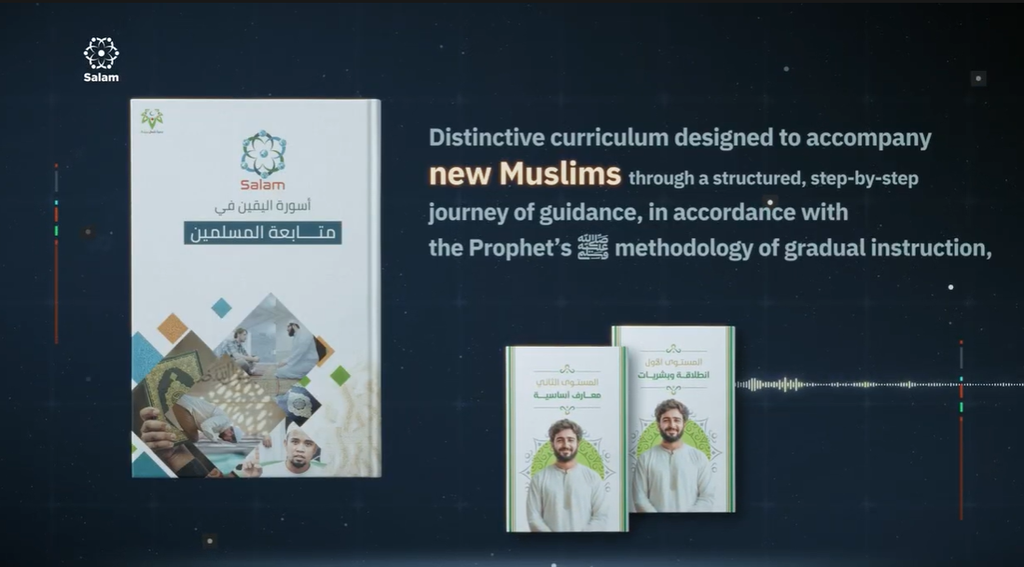
If you’ve recently accepted Islam and want structured guidance for what comes next, the Salam Center offers the Asawirat Al-Yaqeen (Bracelets of Certainty) program, a four-stage curriculum built for new Muslims:
- Stage One covers the foundations — the Shahada, prayer, and purification
- Stage Two addresses repentance and the life of Prophet Muhammad ﷺ
- Stage Three builds character, etiquette, and everyday Islamic rulings
- Stage Four tackles contemporary questions and interfaith theology in depth
You can start this journey whenever you’re ready, at your own pace, with real support along the way.
Reach out directly to the Salam Center team to start the Asawirat Al-Yaqeen (Bracelets of Certainty) program for FREE.
Summary
Jehovah’s Witnesses hold a distinctive theology built on rejecting the Trinity, treating Jesus as a created archangel rather than God, and dividing salvation between a limited heavenly class and an earthly paradise hope. Their doctrine has shifted repeatedly across a century of institutional reinterpretation.
Tawhid offers a different foundation entirely: Allah’s oneness is total, unchanging, and shared with no created being, whether angel, prophet, or intermediary, now or at any point in revealed history.
Frequently Asked Questions
Do Jehovah’s Witnesses believe Jesus is God?
No. Jehovah’s Witnesses explicitly reject Jesus’s divinity, teaching instead that he is Jehovah’s first created being, identified with Michael the Archangel, who exists in a subordinate role to Jehovah rather than as God himself.
Do Jehovah’s Witnesses believe in the Trinity?
No. Jehovah’s Witnesses completely reject the doctrine of the Trinity, holding that only Jehovah is truly God, that Jesus is a distinct created being, and that the Holy Spirit is an impersonal active force rather than a divine person.
What Bible do Jehovah’s Witnesses use?
Jehovah’s Witnesses use the New World Translation of the Holy Scriptures, a translation produced and published by their own Watch Tower Bible and Tract Society rather than a translation shared with mainstream Christian denominations.
Do Jehovah’s Witnesses believe in hell?
Not as eternal conscious punishment. Jehovah’s Witnesses teach that hell refers to humanity’s common grave, and that the wicked face annihilation — permanent non-existence — rather than ongoing conscious suffering.
How does Tawhid differ from what Jehovah’s Witnesses believe about God?
Both reject the Trinity, but Tawhid denies that Allah begets any created being at all, including an archangel-son, while Jehovah’s Witness theology holds that Jehovah created Jesus first as a unique heavenly agent through whom all else was made.
Curious about Islam?
Journey towards clarity and purpose. Our team is here to support you in your search for truth and spiritual guidance.
Embrace the Truth