
What Does a Deist Believe?
| Key Takeaways |
| A deist believes in one rational Creator who designed the universe but does not intervene in it through miracles, prophets, or scripture. |
| Deism relies on human reason and observation of nature to know God, rejecting revealed texts such as the Torah, the Bible, or the Quran as authoritative. |
| The philosophy took its modern shape with Edward Herbert, Lord Herbert of Cherbury, in his 1624 work De Veritate, and later shaped Enlightenment thinkers like Voltaire and Thomas Jefferson. |
| Islam affirms the same starting premise as deism, that the universe has a Creator, but insists this Creator also sends revelation and remains actively engaged with His creation. |
| The Quranic concept of fitrah describes an innate human awareness of Allah, which explains why deists arrive at monotheistic conclusions through reason alone. |
| Muslims believe Allah’s final revelation, the Quran, is protected from the kind of human alteration that deists cite to justify rejecting scripture. |
Deism holds that a single, rational Creator brought the universe into being, then withdrew, leaving it to run by unbroken natural law. A deist trusts reason and the observable order of nature to establish that God exists, and rejects scripture, prophecy, and miracle as reliable paths to truth.
This one sentence captures the whole architecture of the belief system: an active first cause, followed by permanent divine silence.
The rest of what follows explains why deists reach that position, how it took root in European history, and where the Islamic worldview shares deism’s confidence in a Creator while parting ways entirely on the question of whether that Creator speaks.
What does a deist believe?
A deist believes that a single, supremely rational being designed and created the universe, established it to operate according to fixed natural laws, and then ceased any further direct involvement in its workings. This is the core, load-bearing claim of deism, and every other feature of the belief system follows from it. Deists do not deny a Creator; in fact, belief in one Creator is the very starting point of their worldview.
What they deny is that this Creator performs miracles, answers prayer, sends prophets, or reveals scripture. The theist holds that God remained actively interested in and operative in the world he made, while the deist maintains that God configured the universe with self-sustaining powers at the moment of creation and then withdrew entirely.
The image most commonly used to explain this is the divine watchmaker. The watchmaker analogy states that a design implies a designer, and it was given by William Paley in his 1802 book Natural Theology or Evidences of the Existence and Attributes of the Deity.
A watch is too intricate to have assembled itself; it needed a craftsman. In the same way, deists argue, the ordered universe implies a Creator. But once the watch is built and wound, it keeps time on its own. The Creator, in this picture, is the watchmaker who steps back once the mechanism is running.
1. The historical roots and key figures of deism
Deism is not a modern invention. Its formal beginnings trace to a specific person and a specific book. Herbert’s book, De Veritate, outlined a belief system that Herbert called deist, designed as a way to reconcile the religious strife and violence that had stormed through Europe as a result of the Reformation.
Herbert proposed that certain religious convictions were universal, present in every culture regardless of whether that culture had received scripture.
Herbert outlined five tenets: there is one supreme god; God is to be worshipped; virtue and piety constitute that worship; people should repent of their sins; and there is punishment and reward, in this life and the hereafter.
He believed these ideas were innate, planted in the human mind by God himself, and that they formed the shared core beneath Judaism, Christianity, Islam, and even Roman paganism.
Deism reached its widest influence during the Enlightenment. Thomas Jefferson is perhaps the clearest case of a major founder whose thought moved in and around deist territory, and he expressed familiar deist sentiments alongside other statesmen of the Revolutionary age. Jefferson went so far as to produce his own edited version of scripture.
In France, deism took on a sharper, more combative edge. Voltaire was a vocal deist who attacked organised religion while affirming a creator God, and his Philosophical Dictionary and Treatise on Toleration argue that the existence of God can be inferred from the order of nature but that all the rest of religious dogma is human invention.
2. Deists believe reason alone reveals God’s existence
A deist trusts logical inference from nature over any claimed revelation, because they hold that human reason is universal and self-verifying, while reports of miracles or scripture depend on trusting the testimony of others. This single principle is arguably the most important feature of deism, more foundational than the doctrine of a non-intervening Creator itself. Everything else in the belief system is a consequence of this epistemological starting point.
Deism stands in direct contrast to Fideism, the view that religious belief depends on faith or revelation, rather than reason. A deist looks at the intricate order of the cosmos, the precision of natural law, the fact that effects require causes, and concludes that a designing intelligence must exist behind it all.
This is essentially the classical cosmological and teleological argument, stripped of any attachment to a particular religious tradition.
But the deist stops there. Having concluded that a rational Creator exists, the deist declines to trust any specific claim about what that Creator has said or done beyond the observable universe.
A miracle reported in a holy text is, to a deist, simply a human claim, unfalsifiable and unreliable by nature. This is why deists reject the Quran’s account of the Night Journey of Prophet Muhammad, the Bible’s account of the resurrection, and comparable claims across every scriptural tradition equally. It is not that deists single out one religion for skepticism; the skepticism applies uniformly to any claim of supernatural revelation.
3. Deists reject organized religion and its rituals
A deist typically has no formal place of worship, no clergy, and no fixed liturgy, because organized religious practice is, in the deist view, a human construction layered on top of natural religion rather than a requirement of it. There are currently no established deistic religions, and deism can best be described as a basic belief rather than as a religion in itself.
This rejection of ritual follows directly from the deist’s rejection of revelation. If no scripture is authoritative, then no scripture-derived command to pray five times, observe a Sabbath, take communion, or perform any other prescribed ritual carries binding weight.
A deist may still hold personal moral convictions and may even feel a private sense of gratitude or awe toward the Creator, but this remains an individual, internally generated response rather than an obligation imposed by revealed law.
He rejected the divinity of Christ but affirmed a God active in history who rewards virtue and punishes vice, and he repeatedly urged religious tolerance and practical morality over sectarian dispute.
4. Deists deny miracles, prophecy, and answered prayer
A deist holds that the natural order operates without exception, so any reported suspension of natural law, whether a miracle, a fulfilled prophecy, or a prayer answered through direct divine action, is either a misunderstanding of natural causes or an unverifiable human claim. Deists typically reject supernatural events such as prophecy, miracles, and the divinity of Jesus, along with concepts like the Christian Trinity, regarding their faith as a natural religion contrasted with one that is revealed by a God or artificially created by humans.
This is where deism most sharply diverges from every major revealed religion, including Islam, Christianity, and Judaism. Each of these traditions holds that Allah, or God, has intervened directly in human history: sending prophets, revealing scripture, and performing signs. Deism denies all three categories at once.
A deist reading the account of Prophet Muhammad’s Night Journey, for instance, would categorize it the same way as any other reported miracle: outside the bounds of what reason alone can verify, and therefore outside the bounds of what a rational person
should accept as established fact.
Learn More About Islam
Discover the beauty, teachings, and wisdom of Islam in a clear and welcoming way. Start exploring and deepen your understanding today.
Learn MoreHow does deism differ from theism, atheism, and pantheism?
Deism occupies a narrow and specific position on the spectrum of belief about God, distinct from theism, atheism, agnosticism, and pantheism, even though it is frequently confused with each of them. Theism is the broader category: anyone who believes in a personal God who can act in the world, including most Christians, Muslims, and Jews, counts as a theist, while deism is a narrower kind of theism, one that keeps the creator but removes the miracles, the scripture, and the ongoing relationship.
The confusion with atheism is understandable but mistaken. Atheism and deism are sometimes mistaken for each other because both reject organized religion’s claims about miracles and revelation, but the difference is simple: atheism rejects a creator altogether, while deism accepts a creator but rejects supernatural intervention.
A deist is, in this sense, closer to a monotheist than to an atheist on the single most important question: does God exist? Where deism departs from mainstream monotheism, including Islamic monotheism, is on the question of whether that God communicates.
Pantheism, by contrast, identifies God with the universe itself rather than as its separate Creator. Deism keeps God distinct from creation, as an architect is distinct from a building, which is why the watchmaker analogy remains such an apt summary of the deist position.
The Islamic position on deism, presented clearly
Islam agrees with deism on its opening premise and diverges completely on everything that follows. A Muslim affirms, as a deist does, that the universe was brought into being by a single, all-powerful, rational Creator; but a Muslim also affirms, against the deist, that this Creator, Allah, continues to sustain, govern, and communicate with His creation without interruption. This is not a minor disagreement over details. It is the difference between a watchmaker who abandons the watch and a Sustainer who never leaves it.
The Quran makes this distinction with unmistakable clarity. On the question of purposeful creation, Allah states:
وَمَا خَلَقْنَا السَّمَاءَ وَالْأَرْضَ وَمَا بَيْنَهُمَا لَاعِبِينَ
“And We did not create the heaven and earth and that between them in play.” (Quran 21:16)
Where the deist watchmaker analogy pictures a Creator who built the world and then lost interest, the Quran insists creation was never a game, never idle craftsmanship set aside once finished, but an act saturated with continuing purpose.
The same surah continues to establish that this Creator remains a living witness over His creation, not a distant originator.
This continuity is reinforced through the concept of Allah’s ongoing self-disclosure through both nature and revelation together, rather than nature alone:
سَنُرِيهِمْ آيَاتِنَا فِي الْآفَاقِ وَفِي أَنفُسِهِمْ حَتَّىٰ يَتَبَيَّنَ لَهُمْ أَنَّهُ الْحَقُّ ۗ أَوَلَمْ يَكْفِ بِرَبِّكَ أَنَّهُ عَلَىٰ كُلِّ شَيْءٍ شَهِيدٌ
“We will show them Our signs in the horizons and within themselves until it becomes clear to them that it is the truth. But is it not sufficient concerning your Lord that He is, over all things, a Witness?” (Quran 41:53)
This verse is worth pausing on, because it directly addresses the deist’s own preferred method of coming to know God. Deists arrive at belief in a Creator by observing the natural world, the “horizons,” and their own internal reasoning faculties, the “within themselves.” Islam does not dismiss this method.
The Quran explicitly names both the external universe and the human self as genuine signs pointing toward truth.
What Islam adds, and what deism refuses, is the claim that Allah has also spoken directly through revealed guidance, and that this revelation completes rather than contradicts what reason and nature already point toward.
For a broader look at how Islam views the nature of God, Allah’s attributes go far beyond mere first cause.
Read Also: What Do Druids Believe?
Why does the fitrah explain how deists reach monotheism through reason?
Islam explains the deist’s arrival at belief in one rational Creator through the concept of fitrah, an innate disposition placed in every human being at birth that inclines the heart toward recognizing its Creator, even without formal religious instruction.
This is one of the most theologically significant points of contact between Islam and deism, because it means Islam has a built-in explanation for why a movement like deism, entirely independent of the Quran, the Bible, or any organized clergy, would nonetheless conclude that a single, rational, all-powerful being designed the universe.
The Quran describes this innate inclination directly:
فَأَقِمْ وَجْهَكَ لِلدِّينِ حَنِيفًا ۚ فِطْرَتَ اللَّهِ الَّتِي فَطَرَ النَّاسَ عَلَيْهَا ۚ لَا تَبْدِيلَ لِخَلْقِ اللَّهِ ۚ ذَٰلِكَ الدِّينُ الْقَيِّمُ وَلَٰكِنَّ أَكْثَرَ النَّاسِ لَا يَعْلَمُونَ
“So direct your face toward the religion, inclining to truth. [Adhere to] the fitrah of Allah upon which He has created [all] people. No change should there be in the creation of Allah. That is the correct religion, but most of the people do not know.” (Quran 30:30)
The Prophet Muhammad (PBUH) elaborated on this same concept in an authenticated narration, explaining that this innate awareness is present from birth and is shaped, not created, by upbringing:
“Every child is born with a true faith of Islam, to worship none but Allah Alone, but his parents convert him to Judaism, Christianity, or Magianism, as an animal delivers a perfect baby animal.” (Sahih al-Bukhari)
Applied to the case of deism, this hadith offers a striking explanation. A deist, reasoning independently from any Islamic source, from ancient Rome through Enlightenment England to colonial America, keeps arriving at the same conclusion: one rational Creator, discoverable through nature and reason. Islam holds that this is precisely what the fitrah predicts.
The pull toward monotheism is built into the human being; what deism lacks is the second half of the fitrah’s completion, which the Quran identifies as revealed guidance that confirms and perfects what the innate disposition already senses.
For readers exploring this territory further, the Salam Center has written on why Muslims believe in the Quran as that confirming revelation.
Read Also: What Did the Sanhedrin Believe?
Where do deism and Islam sharply disagree on revelation and scripture?
The single greatest point of departure between deism and Islam is the question of whether Allah has spoken through protected, authoritative revelation, and Islam answers this question with total confidence: yes, and that revelation remains intact. A deist rejects scripture broadly, often citing the well-documented history of textual alteration, translation disputes, and human editorial intervention in religious texts over centuries.
This is not an unreasonable historical observation. Christianity vs. Islam comparisons frequently note the layered transmission history of the biblical canon, and deists like Jefferson explicitly built their skepticism around this very issue when he edited the New Testament himself.
Islam’s response to this deist objection is not to dismiss it as baseless but to make a distinct, specific claim: that the Quran, unlike prior scriptures, has been preserved without alteration since its revelation.
This is precisely the kind of claim a sincere deist ought to investigate on its own terms rather than dismiss by association with other scriptural traditions.
Readers curious about the history of the Quran and its transmission will find that its preservation follows an entirely different documented path than the texts a deist has typically encountered.
Islam does not ask anyone, deist or otherwise, to abandon reason in favor of blind acceptance. Quite the opposite: the Quran repeatedly invites its reader to reflect, to observe the natural world, and to reason toward its Creator, which is exactly the deist’s own preferred starting point.
The difference is that Islam holds this reasoning process, when followed honestly and to its conclusion, leads not to a distant watchmaker but to the covenant of prophethood, and specifically to the final message delivered through Prophet Muhammad.
Deism’s God who withdraws sits uneasily beside a natural world that, verse after verse, the Quran describes as still being actively sustained and still speaking through both creation and revelation together.
Read Also: What Do New Agers Believe?
Learn More About Islam
Discover the beauty, teachings, and wisdom of Islam in a clear and welcoming way. Start exploring and deepen your understanding today.
Learn MoreYour Path to Deeper Authentic Knowledge Starts Here with Salam
If the case laid out here has raised more questions than it answered, that is a good sign. Genuine inquiry is exactly what the Salam Platform exists to support.
Explore more articles on the Salam blog covering Islamic beliefs, comparative religion, and the life of Prophet Muhammad (PBUH).
Have a specific question about Islam, faith, or the evidence behind what Muslims believe?
Reach out directly — our team is ready to listen, guide, and welcome you.

Thinking about entering Islam, or simply want to understand what that step involves? The Salam Center team is here to walk through it with you, without pressure and without judgment.
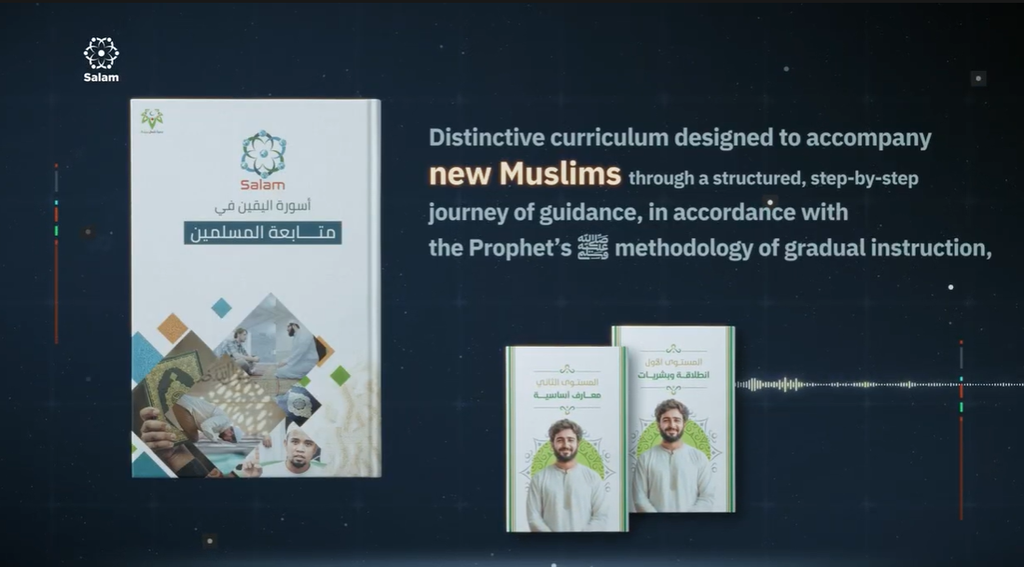
For those who have already taken that step, the Salam Center offers structured post-conversion support through the Asawirat Al-Yaqeen (Bracelets of Certainty) program, a four-stage curriculum built specifically for new Muslims:
- Stage One covers the foundations: the Shahada, prayer, and the core pillars of faith
- Stage Two addresses repentance and deepens knowledge of the Prophet’s life
- Stage Three focuses on personal etiquette and everyday Islamic rulings
- Stage Four tackles contemporary questions, including theological comparisons like this one
General questions about the platform, the curriculum, or anything else are always welcome.
Reach out directly to the Salam Center team to start the Asawirat Al-Yaqeen (Bracelets of Certainty) program for FREE.
Summary
Deism affirms one rational Creator known purely through nature and reason, while firmly rejecting miracles, prophecy, and scripture as unreliable human claims. Islam shares deism’s confidence in a designed universe but insists this Creator remains actively engaged through revelation and sustained care.
The Quranic concept of fitrah explains why independent reasoning, the deist’s own method, so often arrives at monotheism without any scriptural prompting at all. Where deism stops at a silent Creator, Islam invites the same rational inquiry toward a Creator who still speaks, still sustains, and still calls.
Frequently Asked Questions
What is the main belief of a deist?
A deist’s main belief is that one rational Creator designed the universe and set it running according to natural law, but does not intervene through miracles, prophecy, or answered prayer. Deism is theism without supernatural intervention, relying on reason and nature rather than scripture to know God.
Do deists believe in God?
Yes, deists explicitly believe in God, or a Creator. The difference is simple: atheism rejects a creator altogether, while deism accepts a creator but rejects supernatural intervention. This makes deism closer to monotheism than to atheism on the core question of existence.
Is deism the same as Islam?
No, deism and Islam disagree fundamentally on revelation. Both affirm one rational Creator, but Islam holds that Allah sent prophets and revealed the Quran, while deism rejects all claims of scripture and prophecy as unverifiable.
Who were famous deists in history?
Prominent historical deists include Edward Herbert, Voltaire, Thomas Paine, and Thomas Jefferson. The philosophy emerged during the Enlightenment and influenced thinkers including Edward Herbert, Voltaire, Thomas Paine, Benjamin Franklin, and Thomas Jefferson.
Why do deists reject miracles and scripture?
Deists reject miracles and scripture because they consider reason and direct observation of nature the only reliable paths to truth about God. Deists see scripture as interpretations made by other humans and not as an authoritative source, so any reported miracle is treated as unverifiable testimony rather than established fact.
Curious about Islam?
Journey towards clarity and purpose. Our team is here to support you in your search for truth and spiritual guidance.
Embrace the Truth