
What Did the Hellenists Believe?
| Key Takeaways |
| Hellenism refers to the Greek philosophical-religious worldview that spread across the Mediterranean and Near East after Alexander the Great, producing schools like Stoicism, Epicureanism, and Neoplatonism. |
| Stoics believed the cosmos was governed by an impersonal divine reason called the Logos, with no room for a personal, willing Creator who legislates and judges. |
| Epicureans held that the gods, if they existed, were remote and uninvolved, and that the soul dissolved with the body at death. |
| Neoplatonists, following Plotinus, taught that all reality emanates automatically from an impersonal source called “the One,” rather than being created by a deliberate divine act. |
| Islam affirms one willing, knowing, personal Creator (Allah), the immortality of the soul, and a Day of Resurrection — doctrines the major Hellenistic schools each denied or diluted in different ways. |
| The Quran’s case for Tawhid rests on revelation confirmed by rational proof, not on speculative metaphysics alone, which is what set the Islamic articulation of God’s oneness apart from Greek philosophical monism. |
Hellenism was not one belief system but a family of them, born from the fusion of classical Greek thought with the cultures of the ancient Near East.
The Hellenists — the philosophers and their students who carried this Greek worldview across the Mediterranean and into the intellectual life of late antiquity — never agreed among themselves on what the divine was, whether the soul survived death, or whether the universe had any purpose at all.
What did the Hellenists believe?
The Hellenists were the philosophers of the Hellenistic period (323 BCE–31 BCE) who built rival schools — chiefly Stoicism, Epicureanism, and later Neoplatonism — each offering a different account of the divine, the soul, and the good life.
Stoics believed in an impersonal rational force called the Logos that governs all things through fixed fate. Epicureans believed in remote, indifferent gods and a soul that perishes with the body.
Neoplatonists believed reality emanates automatically from a single impersonal source called “the One.”
None of these schools taught a personal Creator who reveals scripture, commands worship, and resurrects the dead — the very doctrines at the center of Islamic belief.
1. Stoicism taught that an impersonal Logos governs all things through fate
Stoicism, founded by Zeno of Citium around 300 BCE in the Stoa Poikile (“Painted Porch”) of Athens, held that the entire cosmos operates under a single rational principle the Stoics called the Logos. This was not a personal God who chooses, commands, or reveals himself.
It was closer to a governing law of nature — reason itself, woven into the fabric of the universe, indifferent to any individual’s pleas or prayers.
Zeno’s followers taught that happiness meant aligning oneself with this cosmic order rather than resisting it. Achieving ataraxia, or tranquility, meant living in accordance with nature and accepting one’s destiny. Two paths lay open to a person facing hardship: rage against fate and lose one’s dignity in the process, or accept what comes with equanimity.
The philosophy proved remarkably durable. It attracted figures as different as Epictetus, a former slave, and Marcus Aurelius, a Roman emperor, showing that its core message crossed every line of social class.
Later psychological movements, including cognitive behavioral therapy, have acknowledged a direct debt to Stoic methods for managing thought and emotion.
But the theological cost of this system is worth naming plainly. A Logos that governs through impersonal fate cannot legislate right and wrong the way a willing, commanding God does.
It cannot forgive, cannot answer prayer, cannot send a messenger. Stoic “providence” was closer to a mechanism than a Sovereign.
2. Epicureanism held that the gods were distant and the soul dissolved at death
Epicurus taught that pleasure — understood as freedom from pain and mental disturbance, not indulgence — was the highest good, and that the universe consisted of nothing but atoms moving through empty space. He believed that knowledge could be attained through observation and reasoning rather than through any divine revelation.
Epicurean physics left almost no room for gods who intervene in human affairs. If deities existed at all in the Epicurean picture, they lived in perfect, undisturbed bliss far removed from the world, taking no interest in human worship, human suffering, or human wrongdoing.
Death, in this system, was simply the atoms of the soul dispersing along with the atoms of the body — total dissolution, with no resurrection and no judgment to fear.
Both Stoicism and Epicureanism were materialist philosophies, and both rejected Platonic metaphysics: there were no Forms in Stoicism, only Reason, and in Epicureanism nothing existed but matter and void.
Neither school gave any privileged position to any people or place, treating the individual as the basic unit of concern rather than a nation or a city.
That is a coherent ethical framework for reducing anxiety about death. It is not an account of a Creator who made the heavens and earth for a purpose, who will resurrect what he created, and who will hold every soul to account — the very promise at the heart of Islamic eschatology and the Islamic view of Allah’s nature.
3. Neoplatonism described reality as an automatic emanation from an impersonal One
Neoplatonism arrived later, in the third century CE, associated above all with the philosopher Plotinus. Where Epicureanism and Stoicism addressed the practical challenge of living well, Neoplatonism turned toward a different set of questions entirely — the ultimate nature of reality, the origin of existence, and the soul’s relationship to the divine.
Neoplatonism maintains monism, the doctrine that all of reality can be derived from a single principle called “the One.” Crucially, this derivation was not described as an act of will or creation. Everything that exists flows out of the One the way light radiates from the sun — automatically, necessarily, without the One deciding or choosing to produce it.
God, in this scheme, is perfect, and everything that emanates from God shares in that eternity by necessity of the process itself, not because God chose to speak it into being.
This is a subtle but decisive difference from Islamic theology. In the Quran, Allah creates by an act of will and command — “Be, and it is” (كُنْ فَيَكُونُ) — not by involuntary overflow. A universe that emanates automatically cannot be a universe that its Source commands, legislates for, or judges.
4. The Hellenists disagreed sharply among themselves on the divine and the soul
One of the most striking facts about Hellenistic philosophy is how little consensus it produced. Stoics affirmed a governing cosmic reason but denied a personal, willing God. Epicureans affirmed atoms and void but denied divine involvement in human life. Neoplatonists affirmed a transcendent source of all being but described its outflow as automatic rather than deliberate.
Add the Skeptics, who doubted whether any of these claims could be known with certainty at all, and the picture becomes one of competing systems rather than a single “Hellenistic religion.”
Pyrrhonian skepticism offered its own vision of the good life, rivaling both the Epicurean emphasis on pleasure and the Stoic emphasis on resigning oneself to fate, built entirely on methodical doubt about whether any of these metaphysical claims could be established.
The Skeptics developed ten specific patterns of skeptical reasoning, built on the idea that for any so-called truth, there exist different and conflicting ways of viewing it, with no way to prefer one over another.
That fragmentation matters for the comparison ahead. A tradition that could not agree on whether God commands, whether the soul survives, or whether truth can even be known stands in sharp contrast to a revelation that answers all three questions directly, consistently, and without internal contradiction across fourteen centuries of transmission — a point explored further in why Muslims believe in the Quran.
Read Also: Scientific Miracles in the Quran
Learn More About Islam
Discover the beauty, teachings, and wisdom of Islam in a clear and welcoming way. Start exploring and deepen your understanding today.
Learn MoreWhat are the historical roots of Hellenistic thought?
The term “Hellenistic” describes the roughly three centuries between the death of Alexander the Great in 323 BCE and the Roman conquest of Ptolemaic Egypt in 31 BCE.
Alexander’s conquests scattered Greek language and culture from Egypt to the edges of India, and in the process, Athens stopped being the political center of an independent world and became one intellectual hub among many inside vast military kingdoms.
Philosophy responded to that upheaval. The classical schools of Plato and Aristotle — the Academy and the Lyceum — kept functioning, but two new movements emerged in the generation after Aristotle’s death that would define the era: Stoicism and Epicureanism. Both arose from a shared instinct.
Political life no longer offered ordinary people much say in their own governance, so philosophy turned inward, toward how an individual might find peace regardless of what empire he happened to live under.
Read Also: What Do Unitarians Believe?
The Islamic position stands in clear contrast to Hellenistic doctrine
Islam teaches that one Creator — Allah — brought the heavens and earth into existence by deliberate will, not by impersonal law or automatic emanation, and that this same Creator commands, legislates, sends prophets, and will resurrect every soul for judgment. Every plank of Hellenistic metaphysics examined above falls short of this at a different point.
Where the Stoics offered an impersonal Logos, the Quran presents a God who speaks, who reveals scripture, and who answers those who call on Him:
قُلْ هُوَ اللَّهُ أَحَدٌ
“Say, ‘He is Allah, [who is] One.'” (Quran 112:1)
اللَّهُ الصَّمَدُ
“Allah, the Eternal Refuge.” (Quran 112:2)
The very next verses close the door that both Neoplatonism’s emanation and any pagan Greek genealogy of the gods left open:
لَمْ يَلِدْ وَلَمْ يُولَدْ وَلَمْ يَكُن لَّهُ كُفُوًا أَحَدٌ
“He neither begets nor is born, nor is there to Him any equivalent.” (Quran 112:3-4)
Where the Stoic and Epicurean systems each collapse into a single divine principle or a plurality of remote gods, the Quran gives the rational proof that monotheism itself supplies logical order to existence, and that competing divine wills would produce not harmony but ruin:
لَوْ كَانَ فِيهِمَا آلِهَةٌ إِلَّا اللَّهُ لَفَسَدَتَا
“Had there been within the heavens and earth gods besides Allah, they both would have been ruined.” (Quran 21:22)
This is the argument of tamanu’ — mutual hindrance — a rational proof for God’s oneness with deep roots in classical Islamic theology (‘ilm al-kalam), and it succeeds precisely where Hellenistic cosmology stalls: a universe of competing or impersonal principles cannot explain the coherent order observed in creation, but a single willing Sovereign can.
This case for Tawhid, or the oneness of Allah, is developed fully in the discussion of God in Islam and in the broader account of faith in Islam.
Islam also parts ways decisively with the Epicurean claim that the soul simply dissolves at death. The Quran affirms bodily resurrection and a Day of Judgment as certain, not speculative:
فَسُبْحَانَ اللَّهِ رَبِّ الْعَرْشِ عَمَّا يَصِفُونَ
“So exalted is Allah, Lord of the Throne, above what they describe.” (Quran 21:22)
Beyond direct scriptural affirmation, the Prophet Muhammad (PBUH) taught the reality of the soul and the reckoning after death with a clarity no Hellenistic school achieved through unaided reason alone:
“When a person dies, his deeds come to an end except for three: ongoing charity, beneficial knowledge, or a righteous child who prays for him.” (Sahih Muslim 1631)
This single hadith answers what Epicurean materialism could never resolve — that a person’s actions and their consequences extend meaningfully beyond the dissolution of the physical body, because the soul persists to face what it has sent forward.
None of this is presented as a Western-style “dialogue between equals” in which every tradition is equally provisional.
The Islamic case rests on revelation confirmed by reason, transmitted through an unbroken chain of authentic narration, not on the shifting speculation of competing philosophical schools that could not even agree among themselves.
That distinction between revealed certainty and philosophical conjecture is explored further in how Islam views the nature of God and in how Islam views other religions.
Read Also: What Do Animists Believe?
Islamic scholarship engaged Greek philosophy critically rather than absorbing it uncritically
It is worth noting, for historical accuracy, that classical Muslim scholars did not ignore Hellenistic thought — they studied it, translated it, and evaluated it against revelation.
Figures within the Ahlus Sunnah wal Jama’ah tradition, including Imam Abu al-Hasan al-Ash’ari and later Imam Abu Hamid al-Ghazali in works like Tahafut al-Falasifa (The Incoherence of the Philosophers), directly engaged Greek-influenced metaphysics on questions like the eternity of the world and the nature of causation, defending the Quranic doctrine of a willing, deliberate Creator against philosophical systems that reduced God to an impersonal necessity.
This is a tradition of confident, informed engagement, not defensive avoidance — a posture explored more broadly in the nine core principles of Islamic belief.
Read Also: Islam Teachings on Respecting Other Religions
Learn More About Islam
Discover the beauty, teachings, and wisdom of Islam in a clear and welcoming way. Start exploring and deepen your understanding today.
Learn MoreYour Path to Deeper Authentic Knowledge Starts Here with Salam
Questions about how Islamic monotheism compares to the philosophical traditions of the ancient world deserve real answers, not surface-level talking points.
The Salam Center for Da’wah and Dialogue exists to provide exactly that — grounded, evidence-based responses drawn from the Quran, authentic Sunnah, and the scholarship of Ahlus Sunnah wal Jama’ah.
Explore more on the Salam Platform
Read further on the Salam blog
Reach out directly to the Salam Center team to start the Asawirat Al-Yaqeen (Bracelets of Certainty) program for FREE.
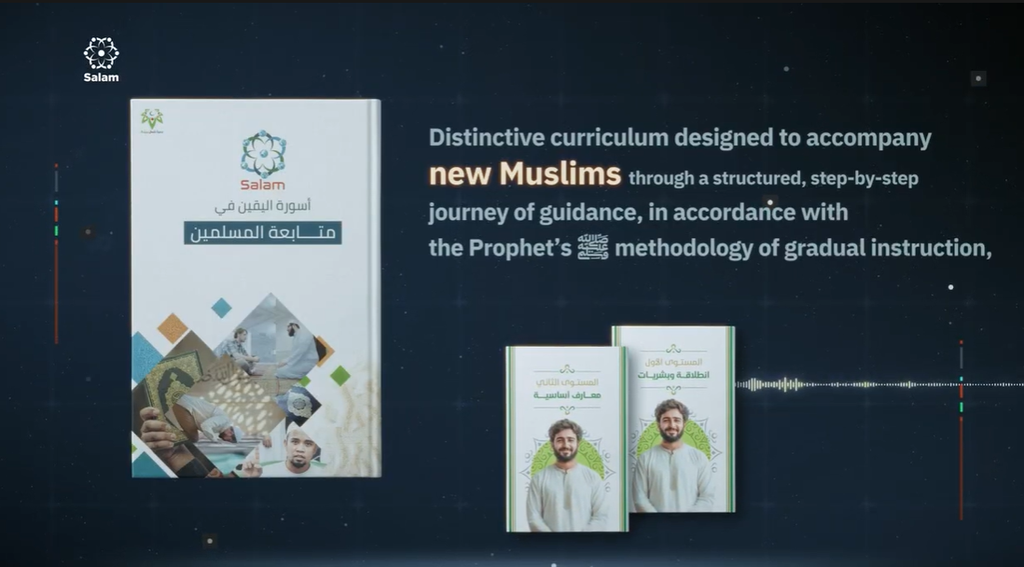
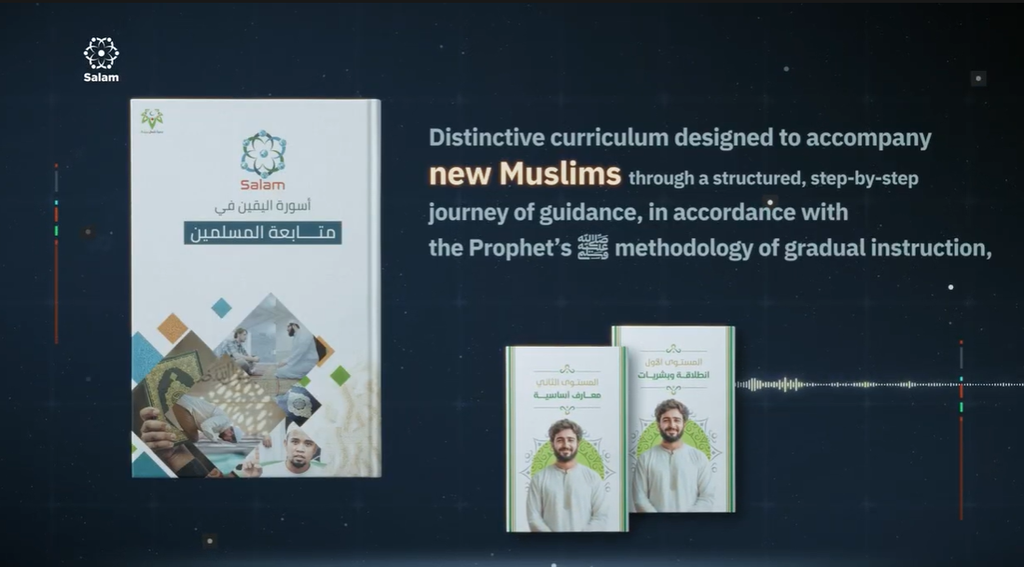
If you’re already a new Muslim and want structured guidance through the fundamentals of faith, Asawirat Al-Yaqeen (Bracelets of Certainty) offers a four-stage curriculum built specifically for this journey:
- Stage One lays the foundation: the Shahada, wudu, ghusl, and salah
- Stage Two builds sincerity and knowledge of the Prophet Muhammad (PBUH)
- Stage Three consolidates etiquette and practical life rulings
- Stage Four addresses contemporary questions, including comparative theology
Reach out directly with any specific questions, for guidance on entering Islam, or for general inquiries — Salam Center welcomes every sincere question.
Reach out directly to the Salam Center team to start the Asawirat Al-Yaqeen (Bracelets of Certainty) program for FREE.
Summary
Hellenistic philosophy split into rival schools that never reached consensus on God, the soul, or the afterlife — Stoics pointed to an impersonal Logos, Epicureans to distant gods and a dissolving soul, Neoplatonists to automatic emanation from an impersonal source.
Islamic doctrine answers each gap directly: one willing Creator, an immortal soul, and certain resurrection — truths affirmed through revelation and defended through sound reason across the Islamic scholarly tradition.
Frequently Asked Questions
Did the Hellenists believe in one God?
No single answer applies, since the Hellenists were divided. Stoics believed in an impersonal governing Logos, Epicureans believed in remote and uninvolved gods, and Neoplatonists described reality flowing from an impersonal “One.” None taught a personal, willing Creator who reveals scripture and commands worship, unlike the Tawhid central to Islamic monotheism.
What did Epicureans believe happened after death?
Epicureans believed the soul was made of atoms that simply dispersed at death, ending all consciousness permanently. They rejected any afterlife, judgment, or resurrection. Islam directly opposes this, affirming bodily resurrection and accountability before Allah, as detailed further under faith in Islam.
Who founded Neoplatonism and what did it teach about God?
Plotinus founded Neoplatonism in the third century CE, teaching that all reality automatically emanates from a single source called “the One,” rather than being created by deliberate divine choice. Islam instead affirms Allah creates by will and command, a distinction central to God in Islam.
Were the “Hellenists” in the Bible the same as Hellenistic philosophers?
No. The word “Hellenists” in the Book of Acts refers to Greek-speaking Jews, a linguistic and cultural group, entirely separate from the Greek philosophical schools of Stoicism, Epicureanism, and Neoplatonism discussed in Hellenistic philosophy.
Curious about Islam?
Journey towards clarity and purpose. Our team is here to support you in your search for truth and spiritual guidance.
Embrace the Truth