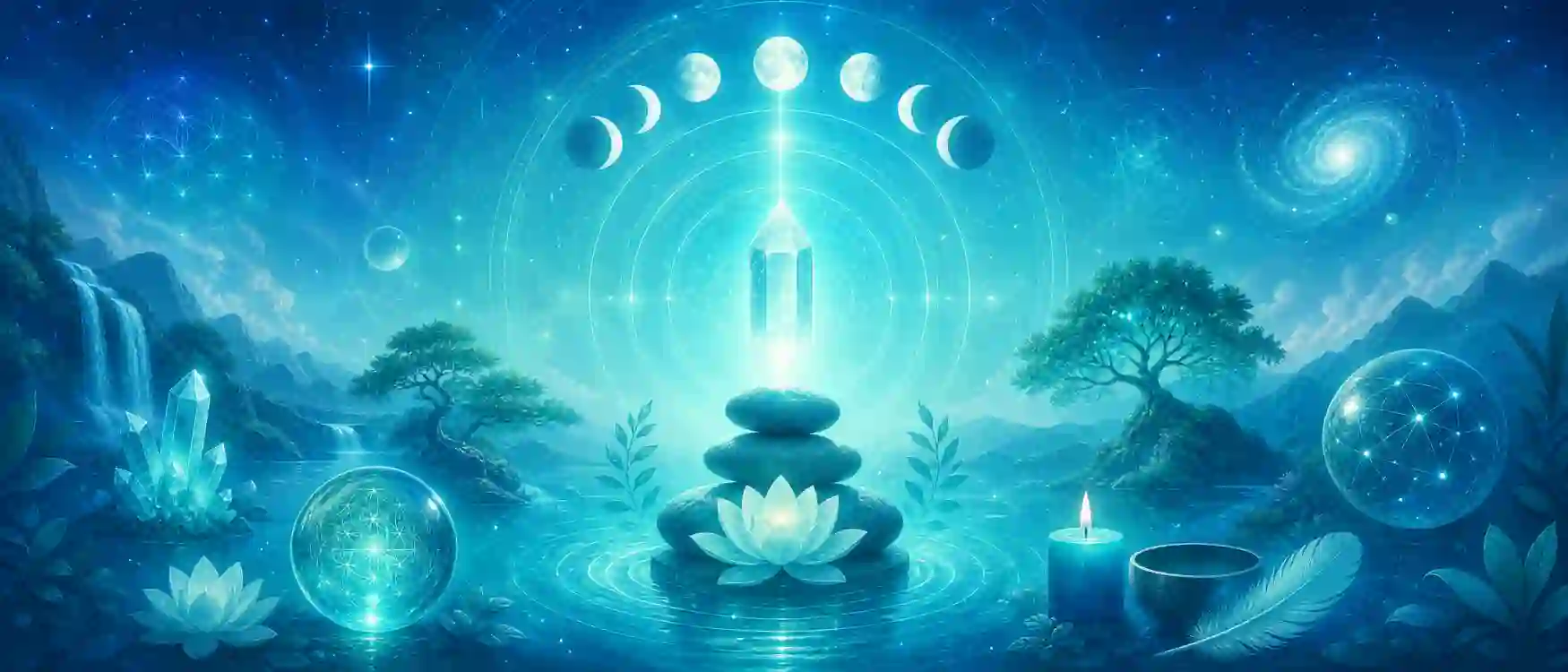
What Do New Agers Believe?
| Key Takeaways |
| New Agers generally hold to pantheism, the belief that the universe itself is God rather than being created by a separate divine being. |
| A central New Age idea is self-deification — the claim that human beings carry an inner divine spark waiting to be “awakened.” |
| Reincarnation and karma, borrowed from Hindu and Buddhist thought, form the New Age framework for the afterlife and moral consequence. |
| Channeling — communicating with spirits, guides, or “ascended masters” — is a common New Age practice for receiving spiritual guidance. |
| Islam categorically rejects pantheism and self-deification as shirk, affirming instead that Allah alone is Creator and that humans are His servants, not fragments of Him. |
| The Quran and Sunnah offer a single, unchanging path to certainty (Yaqeen), in contrast to the New Age approach of blending contradictory belief systems. |
New Agers believe that the self is divine, that all religions point to the same underlying truth, and that spiritual growth comes from within rather than from revelation.
This loosely connected spiritual movement rejects organized religion’s claims to exclusive truth while borrowing freely from Hinduism, Buddhism, Western occultism, and pop psychology.
It has no scripture, no central authority, and no fixed creed — yet its adherents share a recognizable worldview built around monism, karma, reincarnation, and the pursuit of “higher consciousness.”
What Do New Agers Believe?
New Agers believe that all of reality is fundamentally one divine substance (a view called monism), that this divine substance is identical with the universe itself (pantheism), and that human beings carry a spark of this divinity waiting to be uncovered through spiritual practice. New Agers generally accept reincarnation and karma as the mechanisms governing the soul’s progress toward enlightenment, and many practice channeling to receive guidance from spirit entities.
There is no single New Age scripture or founder; the movement is a syncretic blend of Eastern religious concepts, Western occultism, and self-help philosophy, unified more by shared assumptions than by organized doctrine.
This lack of central structure is itself part of the answer. Scholars researching new religious movements consistently describe the New Age as a loosely structured network of individuals and organizations who share a vision of a new era of enlightenment, often called the “Age of Aquarius,” rather than a unified religion with a governing body or a single unified cult.
What holds the network together is not obedience to one authority but agreement on a handful of core convictions — chiefly that the divine is not separate from the world, and that human beings possess an inner divinity waiting to be realized.
1. Pantheism and Monism Form the Theological Core
New Agers hold that God is not a personal being distinct from creation but rather the totality of existence itself — the stars, the earth, animals, and human beings are all considered part of one divine whole. This is pantheism in its clearest form. New Agers believe God is in everything that exists, and everything is God. The universe and all that’s in it — the stars, planets, mountains, oceans, plant and animal life — collectively comprise what God is. Therefore, human beings, as part of the universe, are part of God.
This divine essence goes by several names within the movement. New Agers view God as a force or an essence that pervades all things, usually referred to as the Higher Self, but also known as the Universal Energy, Divine Self, Higher Consciousness, and Ultimate Reality.
The underlying philosophical claim is monism — the idea that all reality is ultimately one, with divinity permeating everything rather than existing as something separate from creation.
This stands in direct opposition to how Islam frames the nature of God. Where New Age pantheism collapses Creator and creation into a single substance, monotheism in Islam insists on an absolute, unbridgeable distinction between the two — a point explored further below.
2. Self-Deification and the Inner Divine Spark
A defining feature of New Age belief is the conviction that human beings do not need an external savior, revelation, or intermediary because divinity already resides within them. The New Age movement teaches that people have everything in themselves necessary to achieve fulfillment — the self is treated as the highest good, and individuals exist to guide themselves, heal themselves, and fulfill their own destinies. This is often called self-deification.
Practically, this means spiritual growth is framed as a process of remembering rather than receiving.
At the symbolic center of New Age worldviews, one typically finds not a concept of God but the concept of the higher Self, so that New Age spirituality has sometimes been called Self Religion.
Humanity is thought to have suppressed this higher nature, and the entire spiritual project becomes one of self-realization. New Agers believe our purpose in life is to discover the divine essence in us and achieve self-realization or enlightenment.
3. Karma and Reincarnation Structure the New Age Afterlife
New Agers generally accept an adapted version of Hindu and Buddhist teaching on karma and reincarnation, holding that the soul is reborn repeatedly across many lifetimes until it achieves full enlightenment. The concept of karma derives from Hinduism and Buddhism, entering New Age thought primarily through the reinterpretation of Helena Blavatsky, founder of Theosophy in 1875.
Within the New Age movement, karma retains two meanings: cause and effect, and an explanation for particular rebirths.
The mechanics work as a kind of spiritual ledger. The good and bad deeds a person does add to or subtract from their accumulated karma, and at the end of life, they are rewarded or punished according to that karma by being reincarnated into either a painful or good new life.
4. Channeling and Occult Practice
Many New Agers believe they can receive spiritual guidance directly from non-human sources — spirit guides, “ascended masters,” or extraterrestrial beings — through a practice called channeling. Many New Agers believe in contacting the spiritual world and receiving spiritual truths from non-humans through channeling, a practice with roots in Theosophy’s introduction of Asian religious concepts like karma and reincarnation into New Age thought.
This openness to contacting unseen entities extends to a broader range of occult practices — divination, numerology, seances, and consultation with psychics — all treated as legitimate paths to spiritual knowledge.
New Agers typically draw their religious and philosophical ideas from a variety of sources, consulting holy books but also feeling free to consult psychics and channelers, whose revelations from spirit guides are considered just as authoritative as those found in holy books.
5. Syncretism Ties the Movement Together Without a Central Creed
New Age spirituality deliberately blends elements from many, often contradictory, religious and philosophical systems rather than adhering to one consistent doctrine. Syncretism — combining and blending various, even contradictory, religious and philosophical teachings — sits alongside monism as one of the movement’s defining features, with adherents ranging from holistic health practitioners and ecologists to goddess-worshipers, reincarnationists, and astrologers.
This deliberate lack of systematic doctrine is often treated within the movement as a strength rather than a weakness — proof that truth cannot be confined to any single tradition.
It is nearly impossible to set out any systematic doctrine associated with the New Age movement, since it borrows from so many religious and esoteric traditions.
For someone weighing spiritual claims, however, this same feature raises an important question: can a belief system built by combining incompatible ideas actually deliver certainty, or does it simply distribute uncertainty across a wider surface?
Learn More About Islam
Discover the beauty, teachings, and wisdom of Islam in a clear and welcoming way. Start exploring and deepen your understanding today.
Learn MoreThe Historical Roots of New Age Thought
The New Age movement did not appear from nowhere. Its intellectual lineage runs through nineteenth-century Transcendentalism, which drew heavily on Hindu scripture and treated intuition as a path to truth, and through the occultist teachings of figures like Helena Blavatsky, founder of the Theosophical Society, and Alice Bailey, whose writings shaped much of the movement’s early vocabulary.
These beliefs were inspired by occultist teachings of various provenance, but especially by the writings of the Christian Theosophist Alice Bailey and the anthroposophical metaphysics of the German visionary Rudolf Steiner.
By the 1960s and ’70s, this current merged with countercultural rejection of institutional religion, producing the recognizable New Age movement.
The term “New Age” itself comes from astrology, referring to the transition from the Age of Pisces to the Age of Aquarius — a shift believed to bring humanity into an era of heightened spiritual awareness and harmony.
The Islamic Position: Where Tawhid Diverges From New Age Belief
Islam offers a direct, unambiguous answer to the central claims of New Age spirituality, and does so without needing to borrow or synthesize from outside traditions. The starting point of Islamic principles is Tawhid — the absolute oneness of Allah — and this single doctrine dismantles pantheism, self-deification, and the multiplicity of New Age spiritual authorities in one stroke.
1. Allah Is Distinct From His Creation, Not Merged With It
Where New Age pantheism holds that the universe itself is divine, Islam draws an unmistakable line between Creator and creation. Allah says in the Quran:
لَيْسَ كَمِثْلِهِ شَيْءٌ ۖ وَهُوَ السَّمِيعُ الْبَصِيرُ
“There is nothing like unto Him, and He is the Hearing, the Seeing.” (Ash-Shura 42:11)
This verse forms the bedrock of Islamic theology regarding the nature of God: Allah is not a diffuse energy pervading rocks, rivers, and human bodies. He is a distinct, self-sufficient Being who created the universe from nothing and who remains entirely separate from it in essence.
The classical position of Ahlus Sunnah wal Jama’ah treats any belief that identifies the Creator with His creation — whether through pantheism or the doctrine of a single universal existence identified with Allah — as a matter that removes a person from the fold of Islam, precisely because it collapses the very distinction that Tawhid exists to protect.
The Prophet Muhammad ﷺ affirmed this uniqueness in his own supplications, describing Allah as:
“The First, so there is nothing before You, and the Last, so there is nothing after You, and the Manifest, so there is nothing above You, and the Hidden, so there is nothing beneath You.” (Sahih Muslim)
Allah’s transcendence does not mean distance or indifference. He is described as Al-Qarib (the Near) and Al-Mujib (the Responsive) — near to His servants without being confused with them, responsive to prayer without requiring intermediaries, and sovereign over creation without being reducible to it.
2. Humans Are Servants of Allah, Not Fragments of Him
The New Age claim that the self is divine and simply needs to be “awakened” has no basis in the Quran or Sunnah. Islam teaches instead that human beings are created servants — honored, entrusted with free will, and morally accountable, but never divine. Allah says:
وَمَا خَلَقْتُ الْجِنَّ وَالْإِنسَ إِلَّا لِيَعْبُدُونِ
“And I did not create the jinn and mankind except to worship Me.” (Quran 51:56)
This verse reframes the entire purpose of human existence. Rather than a journey of remembering one’s own hidden godhood, life is a test of worship, obedience, and moral responsibility toward a Creator who remains eternally distinct from His servants.
This is the foundation of faith in Islam — not self-discovery, but submission to a reality that exists independently of the self.
The Prophet ﷺ taught that even the closest, most beloved servants of Allah never approach divinity; nearness to Allah is measured by obedience, not by dissolution into some cosmic oneness.
3. Revelation, Not Karma, Governs Moral Consequence
Islam rejects both reincarnation and karma as mechanisms for spiritual progress. The Quran teaches a single life, a single death, resurrection, and a final judgment based on one’s deeds measured against Allah’s revealed guidance — not an open-ended cycle of rebirths determined by an impersonal cosmic ledger. Allah states:
كُلُّ نَفْسٍ ذَائِقَةُ الْمَوْتِ ۗ ثُمَّ إِلَيْنَا تُرْجَعُونَ
“Every soul will taste death. Then to Us will you be returned.” (Quran 29:57)
This single verse dismantles the reincarnation framework entirely. Death is not a transition into another earthly body but a return to Allah for judgment. Justice in Islam is not distributed across millions of hypothetical future lives; it is settled through Allah’s perfect knowledge and mercy in a single, final reckoning — a system that offers something New Age karma cannot: certainty (Yaqeen) about ultimate accountability, rather than an indefinite, unverifiable cycle.
Read Also: What Do Druids Believe?
4. One Revealed Truth, Not a Synthesis of Traditions
New Age syncretism treats all spiritual paths as partial reflections of one truth, deliberately blending contradictory systems.
Islam takes the opposite approach: it presents itself as the final, complete, and preserved revelation, not one option among equally valid spiritual products. Allah says:
الْيَوْمَ أَكْمَلْتُ لَكُمْ دِينَكُمْ وَأَتْمَمْتُ عَلَيْكُمْ نِعْمَتِي وَرَضِيتُ لَكُمُ الْإِسْلَامَ دِينًا
“This day I have perfected for you your religion and completed My favor upon you and have approved for you Islam as religion.” (Al-Ma’idah 5:3)
Learn more about why Muslims believe in the Quran as the final, unaltered word of Allah, and how Islam views other religions — not by discarding revealed truth in earlier scriptures, but by recognizing Islam as their completion and correction.
Where New Age spirituality invites practitioners to construct their own patchwork belief system from channeled messages, astrology, and borrowed Eastern concepts, Islam offers a single, textually preserved source of guidance — the Quran — whose history is documented and whose authenticity does not depend on any individual’s private spiritual experience.
Read Also: What Did the Sanhedrin Believe?
5. Consulting Spirits Versus Trusting Divine Guidance
The New Age practice of channeling — seeking guidance from spirit entities or “ascended masters” — has a direct counterpart in Islamic teaching, and it is unambiguously prohibited. The Prophet ﷺ warned:
“Whoever goes to a fortune-teller and asks him about anything, his prayer will not be accepted for forty nights.” (Sahih Muslim)
This prohibition protects Tawhid al-Uluhiyyah — the oneness of worship and reliance — by closing off any avenue that positions unseen intermediaries as sources of guidance alongside or instead of Allah.
Genuine guidance in Islam comes through revelation, safeguarded and transmitted through the Prophet’s ﷺ own night journey and the documented history of his prophethood, not through unverifiable contact with spirits.
Read Also: What Does a Deist Believe?
Learn More About Islam
Discover the beauty, teachings, and wisdom of Islam in a clear and welcoming way. Start exploring and deepen your understanding today.
Learn MoreYour Path to Deeper Authentic Knowledge Starts Here with Salam
Every question about faith deserves a clear, honest answer — not a rushed one.
The Salam Center team welcomes sincere inquiry from anyone comparing belief systems, wherever that search currently stands.
Explore more on the Salam Platform, read further on the Salam blog, or reach out directly with any question, however specific or difficult it may seem.
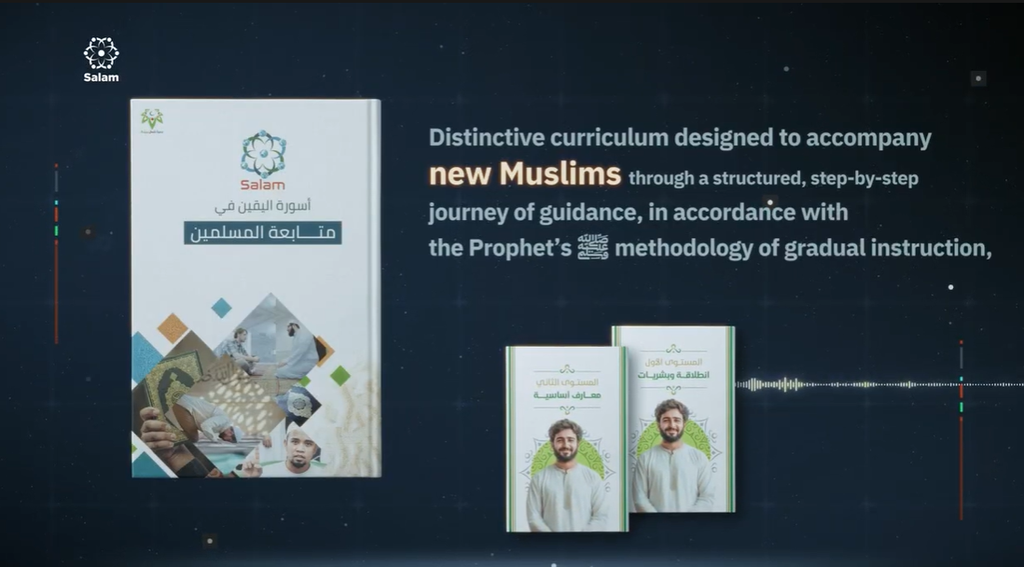
If these questions resonate with you personally, there’s a structured path forward. New Muslims at Salam are guided through Asawirat Al-Yaqeen (Bracelets of Certainty) — a four-stage program built for exactly this stage of the journey:
- Stage One lays the foundation: the Shahada, prayer, purification, and the core pillars of faith
- Stage Two builds sincerity and knowledge of the Prophet ﷺ through his seerah
- Stage Three consolidates character, etiquette, and practical daily rulings
- Stage Four addresses deeper intellectual questions — including how Islam engages contemporary spiritual movements and philosophies
Reach out directly to the Salam Center team to start the Asawirat Al-Yaqeen (Bracelets of Certainty) program for FREE.
Summary
New Agers hold to pantheism, self-deification, and reincarnation, treating divinity as an internal spark rather than an external Creator, and blending contradictory traditions instead of following one revealed path. These commitments shape a spirituality built on personal experience rather than fixed truth.
Islamic Tawhid rejects each of these premises directly, affirming Allah as wholly distinct from creation and human beings as His accountable servants. The Quran and Sunnah offer a complete, unaltered path to certainty that New Age syncretism, by design, cannot provide.
Frequently Asked Questions
Do New Agers believe in one God?
No. New Agers generally hold to pantheism, believing the universe itself is divine rather than created by a single, separate God. This contrasts directly with Islamic monotheism, where Tawhid affirms Allah alone as Creator, entirely distinct from His creation (Quran 42:11).
What is the New Age belief about the soul after death?
New Agers typically believe in reincarnation, where the soul is reborn repeatedly across lifetimes based on accumulated karma until it reaches enlightenment. Islam teaches a single life followed by resurrection and judgment: “Every soul will taste death. Then to Us will you be returned” (Quran 29:57).
Is channeling the same as prayer in Islam?
No. Channeling involves contacting spirits or “guides” for guidance, while Islamic prayer (salah and du’a) is directed exclusively to Allah. The Prophet ﷺ warned that consulting fortune-tellers voids a person’s prayers for forty nights (Sahih Muslim).
Why do New Agers believe humans are divine?
New Age self-deification teaches that people carry an inner divine spark needing only to be “awakened.” Islam instead teaches humans are honored servants of Allah, created to worship Him: “I did not create the jinn and mankind except to worship Me” (Quran 51:56) — not to discover self-divinity.
Can New Age beliefs be reconciled with Islamic monotheism?
No. Core New Age doctrines — pantheism, self-deification, and reincarnation — directly contradict Tawhid, the foundation of Islamic belief. Ahlus Sunnah wal Jama’ah holds that identifying creation with the Creator constitutes shirk, placing these belief systems in fundamental theological opposition.
Curious about Islam?
Journey towards clarity and purpose. Our team is here to support you in your search for truth and spiritual guidance.
Embrace the Truth