What Is the Quran in Islam?
| Key Takeaways |
| The Quran is the literal word of Allah, revealed to Prophet Muhammad (PBUH) through the Angel Jibreel over 23 years. |
| The word “Quran” derives from the Arabic verb qara’a, meaning “to recite” — emphasizing that oral recitation is intrinsic to its nature. |
| The Quran consists of 114 chapters (Surahs) and 6,236 verses (Ayahs), revealed in Classical Arabic, the language in which it remains to this day. |
| The Quran is the primary source of Islamic law, belief, ethics, and spirituality, with the Sunnah of the Prophet (PBUH) serving as its authoritative explanation. |
| The Quran has remained unchanged since its revelation, preserved both in writing and in the hearts of millions of memorizers (Huffaz) across every generation. |
| The Quran is the final divine revelation sent to all of humanity, abrogating all previous scriptures and completing the chain of prophecy. |
Understanding what the Quran is, what it contains, how it was revealed, and why it matters forms the foundation of understanding Islam itself. Explore that foundation here.
What Is the Quran in Islam?
The Quran is the literal Word of Allah, revealed to His final Prophet, Muhammad (PBUH), through the Angel Jibreel (Gabriel) over a period of 23 years. Every word in it, from its opening Surah to its last, is the direct Speech of Allah — not an inspired interpretation, not a collection of human reflections, but a precise divine communication preserved in its original Arabic without the alteration of a single letter.
For more than 1.8 billion Muslims worldwide, it is the supreme and unalterable source of truth — a living Book whose guidance is as binding and relevant today as the moment it was first revealed in the 7th century.
The Literal Meaning of the Word “Quran”
The word “Quran” (القرآن) comes from the Arabic root qara’a (قرأ), which means “to read” or “to recite.” The name was not chosen by any human being — the Quran names itself, and the term appears within its own verses 68 times.
This is significant: the very identity of the Book is tied to the act of recitation. It was revealed orally, received aurally, and transmitted from generation to generation through the voice as much as through the pen.
What Language Is the Quran Written In?
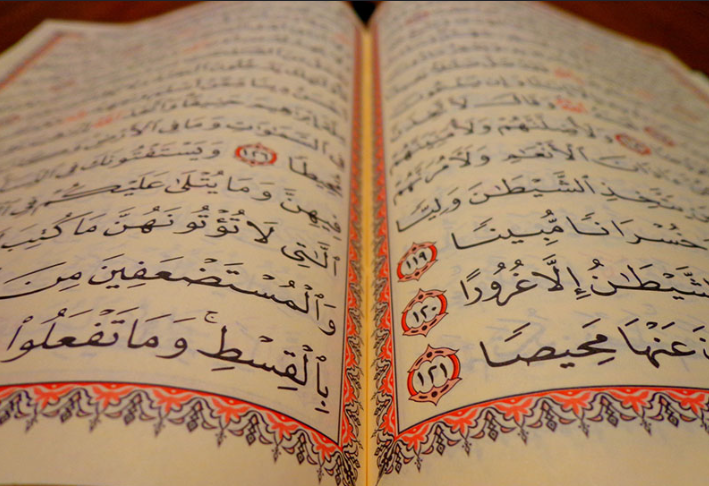
The Quran was revealed in Classical Arabic, the language of the Quraysh tribe and the highest literary tongue of 7th-century Arabia. Allah chose Arabic as the vehicle of His final message:
إِنَّا أَنزَلْنَاهُ قُرْآنًا عَرَبِيًّا لَّعَلَّكُمْ تَعْقِلُونَ
“Indeed, We have sent it down as an Arabic Quran that you might understand.” (Quran 12:2)
The Quran is the pinnacle of the Arabic language — a standard of eloquence no human writer has ever equaled or replicated.
The doctrine of i’jaz al-Quran (the inimitability of the Quran) is among the most foundational convictions of every Muslim: the Quran is the Speech of Allah — divine and preserved, unparalleled and unmatched by any human speech, and inimitable by any individual or group.
Arabic translations of the Quran’s meaning exist in virtually every language, but no translation carries the status of the Quran itself. Only the original Arabic text is considered the actual Quran; translations are aids to understanding, never substitutes.
The Definition of the Quran in Islamic Scholarship
The Quran is the Speech of Allah (Kalaam Allah), revealed to Prophet Muhammad (PBUH) through the Angel Jibreel, transmitted to us by continuous, unbroken chain (Tawatur), preserved in the written Mushaf, recited in worship, and inimitable in its nature.
Every element of this definition carries weight.
“Speech of Allah” affirms its divine authorship.
“Revealed through Jibreel” establishes the mechanism of transmission.
“Transmitted by Tawatur” guarantees that it was not narrated by one person or a small group but by so many, in every generation, that forgery or corruption is an intellectual impossibility.
“Preserved in the Mushaf” refers to the physical codex.
“Recited in worship” reflects the inseparability of the Quran from Salah.
And “inimitable” points to its miraculous nature, the challenge Allah Himself issues to all of creation to produce even a single Surah comparable to it.
How Was the Quran Revealed?
The Quran was revealed to Prophet Muhammad (PBUH) gradually over 23 years, beginning in the month of Ramadan in 610 CE and concluding shortly before his death in 632 CE. The first verses revealed were the opening lines of Surah Al-Alaq:
اقْرَأْ بِاسْمِ رَبِّكَ الَّذِي خَلَقَ
“Recite in the name of your Lord who created.” (Quran 96:1)
The Prophet (PBUH) himself described the experience of receiving revelation in an authenticated narration recorded in Sahih al-Bukhari, where he reported that revelation sometimes came like the ringing of a bell and other times Jibreel would appear to him in human form and speak the words directly.
The revelation was not delivered all at once. This gradual descent — known as tanzeel — served a profound purpose: each portion of the Quran was revealed in response to events, answered questions that arose in the community, addressed the developing spiritual and legal needs of the early Muslims, and allowed the Prophet (PBUH) and his Companions to absorb, memorize, and live by each revelation before the next came. As the Quran itself explains:
وَقُرْآنًا فَرَقْنَاهُ لِتَقْرَأَهُ عَلَى النَّاسِ عَلَىٰ مُكْثٍ وَنَزَّلْنَاهُ تَنزِيلًا
“And [it is] a Quran which We have separated [by intervals] that you might recite it to the people over a prolonged period. And We have sent it down progressively.” (Quran 17:106)
Learn More About Islam
Discover the beauty, teachings, and wisdom of Islam in a clear and welcoming way. Start exploring and deepen your understanding today.
Learn MoreWhat Does the Quran Contain?
The Quran contains guidance for every dimension of human life — spiritual, moral, legal, social, and intellectual. Its contents span the full range of human existence and divine truth. Among its central subjects:
1. Tawheed — the absolute Oneness of Allah
The foundational truth of the Quran is that Allah alone deserves worship, that He has no partner, no son, and no equal. This is the bedrock upon which all Quranic teaching rests. For a deeper exploration of this principle, the Salam Platform’s dedicated article on Monotheism elaborates on this core doctrine in depth.
2. The stories of the Prophets
The Quran recounts the lives and missions of 25 named prophets, from Adam to Muhammad (PBUH), drawing lessons from each for the believers. These are among the most powerful sections of the Quran — narratives of struggle, faith, and divine support that speak directly to the human soul.
3. Laws and ethics governing daily life
The Quran establishes the rulings of worship, family, commerce, justice, and interpersonal relations, laying the foundation for Islamic jurisprudence (Fiqh). These legal dimensions are developed fully through the Islam principles that structure the Muslim’s entire way of life.
4. The nature of Allah, the unseen, and the Hereafter
The Quran describes the attributes of Allah, the reality of angels, the nature of the soul, the events of the Day of Judgment, and the realities of Paradise and Hellfire with a vividness that no human writing approaches.
For those seeking to understand how Islam views the nature of Allah, the Quran is the primary and decisive reference.
5. Refutations of disbelief and falsehood
The Quran addresses the arguments of polytheists, the distortions introduced into earlier scriptures, and the doubts raised by opponents of the Prophet (PBUH) — engaging the intellect while inviting the heart. Its approach to other religions is clear, just, and grounded in divine wisdom.
What Religion Uses the Quran?
The Quran is the holy book of Islam — and Islam alone. It is the exclusive scripture of the Muslim faith, unlike older scriptures that are shared or referenced across different Abrahamic traditions.
While the Quran affirms the original revelations sent to previous prophets — including the Tawrat (Torah) given to Prophet Musa, the Zabur (Psalms) given to Prophet Dawud, and the Injeel (Gospel) given to Prophet Isa — it holds that those earlier scriptures were altered over time and are no longer preserved in their original form. The Quran itself describes this:
وَأَنزَلْنَا إِلَيْكَ الْكِتَابَ بِالْحَقِّ مُصَدِّقًا لِّمَا بَيْنَ يَدَيْهِ مِنَ الْكِتَابِ وَمُهَيْمِنًا عَلَيْهِ
“And We have revealed to you the Book in truth, confirming that which preceded it of the Scripture and as a criterion over it.” (Quran 5:48)
The Quran, in the Islamic understanding, is the final, complete, and uncorrupted revelation — the criterion (Furqan) by which all religious claims are to be measured.
Those seeking to understand the relationship between the Quran and earlier scriptures will find the Salam Platform’s comparative articles on Islam vs. Christianity and Islam vs. Judaism instructive, as well as the detailed discussion of what the Quran says about other religions.
What is the Structure of the Quran?
The Quran consists of 114 chapters (Surahs) and 6,236 verses (Ayahs), contained within the holy book along with the traditions of the Prophet. The Surahs vary dramatically in length — from the majestic opening chapter Al-Fatiha (7 verses) to the extensive Surah Al-Baqarah (286 verses, the longest), to the brief Surah Al-Kawthar (3 verses, the shortest).
The arrangement of the Surahs within the Mushaf was not determined by human editorial judgment. The order of the Quran is not chronological but rather was divinely ordained through the guidance of Angel Jibreel (PBUH) to Prophet Muhammad (PBUH).
Scholars of Quranic sciences classify the Surahs into two categories based on the period of their revelation:
Meccan Surahs were revealed during the first 13 years of the Prophet’s mission. They typically focus on the core beliefs of Islam, the concept of monotheism, and the Day of Judgment.
Medinan Surahs came after the Prophet’s migration to Medina. They often contain laws, social regulations, and guidance on community life.
To facilitate memorization and complete recitation, the Quran is also divided into 30 equal parts (Juz’), allowing a Muslim to complete the entire Quran in 30 days — a practice that reaches its height during the blessed month of Ramadan.
How Old Is the Quran?
The Quran was first revealed in 610 CE, making it over 1,400 years old. The physical compilation of the Quran into a single written Mushaf began under the first Caliph, Abu Bakr al-Siddiq (may Allah be pleased with him), following the Battle of Yamama in 633 CE, when a significant number of the Companions who had memorized the Quran were martyred.
The complete standardization of the written text was finalized under the third Caliph, Uthman ibn Affan (may Allah be pleased with him), around 650 CE.
The Quran read today is the same text, the exact record of the revelations that were delivered to Muhammad (PBUH).
For a fuller account of how the Quran reached us through the centuries, the Salam Platform’s dedicated article on the history of the Quran traces this remarkable journey in depth.
How Was the Quran Preserved?
The Quran was preserved through two parallel channels from the very first day of revelation: oral memorization and written record. The Prophet (PBUH) commanded his Companions to memorize every verse as it was revealed and appointed designated scribes to write it down on whatever materials were available — parchment, palm leaves, flat bones. Both channels ran simultaneously and reinforced each other.
The oral tradition was — and remains — the primary guardian of the Quran. The Prophet’s reception of the Quran was through directly listening to Jibreel’s recitation, and special attention was given to Caliph Uthman ibn Affan’s final compilation, which standardized the criteria for what is Quran and what is not.
This dual preservation — memorized in hearts and written in the Mushaf — is what made the Quran the most authenticated text in human history.
Today, millions of Muslims worldwide — men, women, and children — have memorized the complete Quran from cover to cover, ensuring that its preservation continues to rest in living human hearts as much as in printed copies.
Read Also: Has the Quran Been Changed?
The Quran is the Miracle of Prophet Muhammad (PBUH)
Every prophet was sent with miracles suited to the dominant mastery of his era. Prophet Musa (PBUH) was sent with miracles that transcended the magic of his time. Prophet Isa (PBUH) came with signs that surpassed the medicine of his age.
Prophet Muhammad (PBUH) was sent to an era that exalted eloquence and poetry above all else — and his enduring miracle is a Book so magnificent in language and meaning that the greatest poets and orators of Arabia fell silent before it.
The Quran itself challenges those who deny it to “produce something like it” if they are truthful in their claim — this is known as the eternal challenge of the Quran, establishing that its authorship cannot reasonably be attributed to anyone but Allah.
وَإِن كُنتُمْ فِي رَيْبٍ مِّمَّا نَزَّلْنَا عَلَىٰ عَبْدِنَا فَأْتُوا بِسُورَةٍ مِّن مِّثْلِهِ
“And if you are in doubt about what We have sent down upon Our Servant [Muhammad], then produce a surah the like thereof.” (Quran 2:23)
This challenge has stood for over 14 centuries. No individual, no civilization, no literary tradition has produced a response.
The Quran is a linguistic miracle — in its preservation as the unchanged word of Allah, along with its unique literary style that man has never been able to replicate, this miracle that transcends time and space is proof of Allah’s existence.
Read Also: Does the Quran Say the Bible Is True?
What Muslims Believe About the Quran?
Muslims believe the Quran with absolute certainty (Yaqeen) — not as historical tradition alone but as a present, living reality. Five convictions are central to the Muslim’s relationship with the Quran:
First, the Quran is the literal Speech of Allah — every word, every letter, is divine.
Second, it is completely preserved. Not a word has been changed, added, or removed since its revelation. This is a divine guarantee:
إِنَّا نَحْنُ نَزَّلْنَا الذِّكْرَ وَإِنَّا لَهُ لَحَافِظُونَ — “Indeed, it is We who sent down the Reminder and indeed, We will be its guardian.” (Quran 15:9)
Third, it is the final revelation. No new scripture will come after it. The chain of prophethood ended with Muhammad (PBUH), and the Quran is complete, sufficient, and final for all of humanity until the Day of Judgment.
Fourth, it is a universal Book — not the scripture of one nation or one era, but a guidance sent for all of humanity and all times.
Fifth, reading the Quran is itself an act of worship. Every letter recited carries a reward from Allah. Muslims believe that the Holy Quran, being the revealed word of Allah, is the cornerstone of their faith — the basic source of the Islamic creed, philosophy, laws, and way of life.
For a deeper exploration of what Muslims believe about the Quran, the Salam Platform offers comprehensive answers to the question what do Muslims believe about the Quran and why do Muslims believe in the Quran.
Read Also: Why Is the Quran in Arabic?
Learn More About Islam
Discover the beauty, teachings, and wisdom of Islam in a clear and welcoming way. Start exploring and deepen your understanding today.
Learn MoreConnect With the Salam Platform
If the Quran has stirred a question in your heart — about its message, its truth, or what it asks of you — the Salam Center is here for you.
Explore more on the Salam Platform and read articles that accompany seekers and new Muslims on every step of their journey.
Visit the Salam blog for in-depth Islamic content grounded in authentic scholarship.
Reach out directly for personal guidance, questions about Islam, or if you wish to take the Shahada.
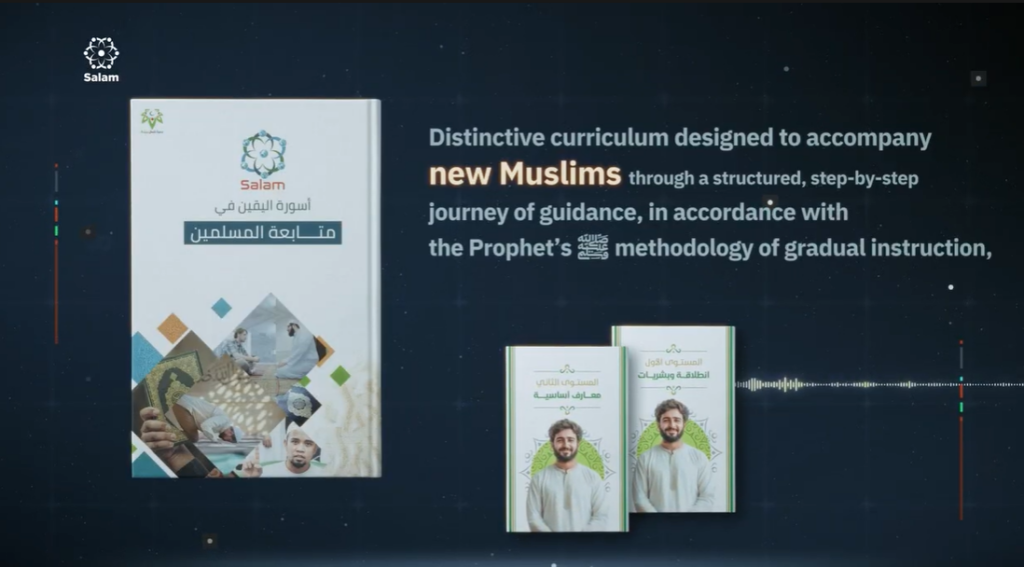
For new Muslims, the Asawirat Al-Yaqeen (Bracelets of Certainty) program offers a structured, compassionate path through the post-conversion phase:
- Stage One covers the Shahada, pillars of Islam, purification, and prayer
- Stage Two explores the pillars of Iman, fasting, Zakat, and Hajj
- Stage Three addresses repentance and the life of the Prophet (PBUH)
- Stage Four equips new Muslims with the knowledge and confidence to navigate contemporary challenges
The program has guided 114,588 new Muslims across 140 countries, with over 63% completing all four stages. Join a community of believers who have walked this path before you.
Reach out directly to the Salam Center team to start the Asawirat Al-Yaqeen (Bracelets of Certainty) program for FREE.
Summary
The Quran is the verbatim Speech of Allah revealed to Prophet Muhammad (PBUH) through the Angel Jibreel over 23 years, comprising 114 Surahs and 6,236 Ayahs in Classical Arabic. It serves as the supreme source of Islamic law, creed, ethics, and spirituality — preserved without alteration through an unbroken chain of oral and written transmission across fourteen centuries.
Its preservation is both a divine promise and a historical reality: from the first manuscripts dated to within decades of the Prophet’s lifetime to the millions of Huffaz who carry its words in memory today, the Quran stands as the most authenticated text in human history.
Every seeker who opens it with sincerity finds in it far more than information — a conversation that speaks to the deepest questions the human heart carries.
Frequently Asked Questions
What is the basic information about the Quran?
The Quran is the holy book of Islam, believed by Muslims to be the literal Word of Allah revealed to Prophet Muhammad (PBUH) through the Angel Jibreel. It consists of 114 chapters (Surahs) and 6,236 verses (Ayahs), written in Classical Arabic, and was revealed over 23 years beginning in 610 CE. It is the primary source of Islamic belief, law, and morality.
What does the word “Quran” literally mean?
The word “Quran” derives from the Arabic root qara’a (قرأ), meaning “to recite” or “to read,” reflecting the centrality of oral recitation in how the revelation was transmitted and experienced. The name is the Quran’s own self-designation, appearing 68 times in its verses. It was not assigned by humans but by Allah Himself through the revelation.
What language is the Quran written in?
The Quran was revealed and preserved in Classical Arabic, the language of the Quraysh tribe of 7th-century Arabia — a language the Quran itself elevated to its highest literary pinnacle. Arabic translations of its meaning exist in most world languages, but only the original Arabic text carries the status of the Quran itself. Translation is an aid to comprehension, never a replacement for the divine text.
How old is the Quran and has it been changed?
The Quran was first revealed in 610 CE, making it over 1,400 years old, and it has remained unchanged since its revelation — a preservation guaranteed by Allah in Quran 15:9. Physical manuscripts radiocarbon dated by the University of Oxford, including the Birmingham Quran (568–645 CE), confirm the text’s continuity with the era of the Prophet (PBUH). No alteration, addition, or deletion has ever been established in its text.
What is the difference between the Quran and the Hadith?
The Quran is the literal Speech of Allah — every word divine — while the Hadith records the authenticated sayings and actions of Prophet Muhammad (PBUH), whose meaning originates from Allah but whose phrasing is the Prophet’s own. The Quran is the supreme primary source; the Hadith, particularly the collections of Imams al-Bukhari and Muslim, serves as its authoritative explanation and practical application. Together, the Quran and the authenticated Sunnah form the complete foundation of Islamic knowledge.
Curious about Islam?
Journey towards clarity and purpose. Our team is here to support you in your search for truth and spiritual guidance.
Embrace the Truth