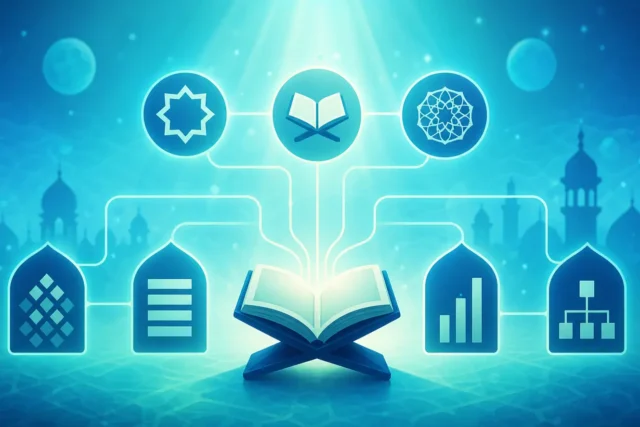
How Is the Quran Organized?
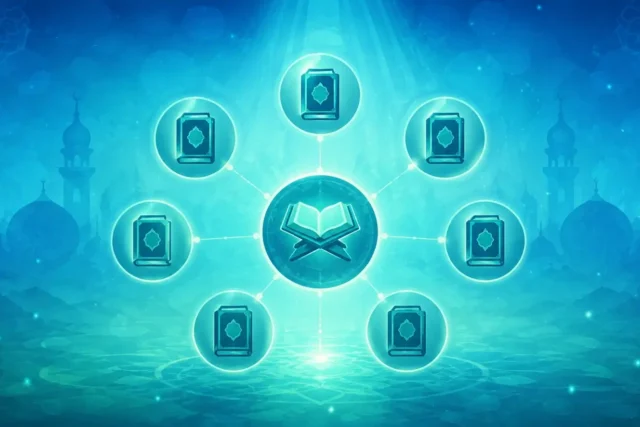
Key Takeaways The Quran contains 114 chapters (Surahs), each composed of individual verses called Ayat, revealed to Prophet Muhammad (PBUH) over approximately 23 years. Surahs…
Browse our complete collection of articles across all categories and topics.
404 articlesKey Takeaways The Quran contains 114 chapters (Surahs), each composed of individual verses called Ayat, revealed to Prophet Muhammad (PBUH) over approximately 23 years. Surahs…
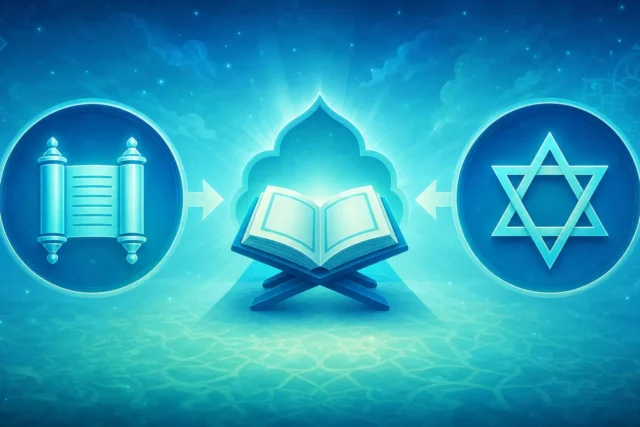
Key Takeaways The Quran does not contain the Old Testament. Muslims believe Allah revealed the Torah (Tawrah) to Prophet Musa (Moses) and the Psalms (Zabur)…
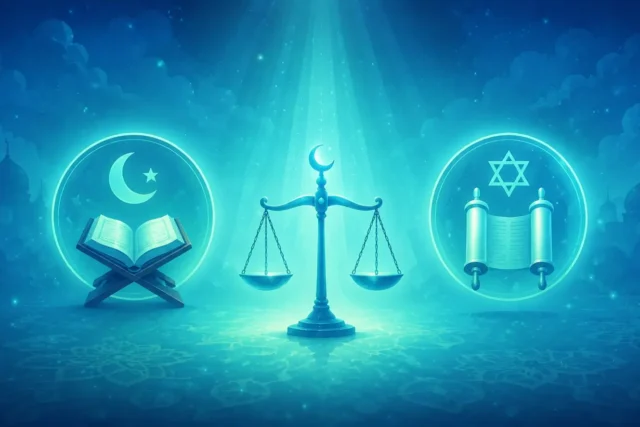
Key Takeaways The Quran is the final, preserved word of Allah revealed to Prophet Muhammad (PBUH), while the original Torah was revealed to Prophet Musa…
Key Takeaways The Quran is the direct, verbatim word of Allah revealed to Prophet Muhammad (PBUH) over approximately 23 years, preserved without alteration to this…
Key Takeaways The Quran was revealed to Prophet Muhammad (PBUH) between 610 CE and 632 CE and was fully compiled into a single written volume…
Key Takeaways There is only one Quran — the same text preserved unchanged since its revelation to Prophet Muhammad (PBUH) over 1,400 years ago. What…
Key Takeaways The Quran was revealed to Prophet Muhammad (PBUH) over approximately 23 years, beginning in 610 CE in the Cave of Hira near Mecca.…
Key Takeaways The Quran is the direct word of Allah, revealed to Prophet Muhammad (PBUH) through the Angel Jibreel (Gabriel) over approximately 23 years. The…
Key Takeaways The Quran was revealed to Prophet Muhammad (PBUH) in Arabic over approximately 23 years, from 610 CE until his death in 632 CE.…
Key Takeaways The Night Journey (Al-Isra’ wal-Mi’raj) was a miraculous physical and spiritual journey granted to Prophet Muhammad (PBUH) by Allah, affirmed in the Quran…
Key Takeaways Islam is built on pure monotheism — the absolute oneness of Allah — while Hinduism embraces polytheism, with many deities worshipped across its…
Key Takeaways Judaism began on pure monotheism — the same Abrahamic foundation as Islam — but its accumulated theological layers include grave deviations: anthropomorphism, tribal…
Key Takeaways Islam is a divinely revealed religion with the Quran as its authenticated scripture, while Buddhism is a human philosophical system with no claim…
Key Takeaways Islam and Christianity are the world’s two largest religions, together accounting for more than half of the global population, yet they differ fundamentally…
Key Takeaways The Sunni–Shia split originated from a political dispute over leadership succession after the Prophet Muhammad (PBUH), but the differences between the two have…
Key Takeaways Sufism emerged in early Islamic history as a movement emphasizing spiritual purification, but the term “Sufi” was not used during the Prophet’s (PBUH)…
Key Takeaways Most humanists do not believe in God; secular humanism explicitly rejects theism and grounds morality in human reason alone. Humanism places humanity at…
Key Takeaways The belief in the existence of only one god is called Tawhid in Islam, and it is the absolute foundation upon which every…
Belief in one God — Tawhid — is the axis around which everything in Islam revolves. Every act of worship, every moral commitment, every aspiration…
There are questions every human heart eventually asks: Is there something greater than me? Is anyone truly aware of my condition? These are the questions…
Key Takeaways Believing in God without following a religion is a false philosophical position. Allah created human beings with a natural disposition (fitrah) to worship…
What does it feel like to truly believe in Allah? Not the surface-level acknowledgment that He exists, but the deep, settled conviction that transforms how…
Key Takeaways Believing in one God while rejecting the Trinity and the divinity of Jesus is precisely the theological position Islam has held since its…
Key Takeaways In Islam, every creature in existence — from the largest whale to the smallest ant — exists in a state of continuous submission…
Key Takeaways Believing in Allah begins with honest intellectual inquiry — not blind acceptance — and Islam actively encourages this. The Quran presents rational arguments…
Key Takeaways Islam teaches that every human being is born in a state of fitrah — pure, natural disposition — with no inherited sin or…
Key Takeaways Muslims believe Prophet Muhammad (PBUH) is the final messenger of Allah, sent to all of humanity until the Day of Judgment. The Prophet…
Key Takeaways Islam teaches that Allah created the universe in six days (ayyam) through His command “Be” (Kun), as stated explicitly in the Quran. The…
Key Takeaways In Islam, salvation means eternal success — entering Paradise — through sincere belief in Allah alone, righteous deeds, and His mercy, not through…
Key Takeaways Islam does not believe in rebirth or reincarnation — the soul lives once in this world, then passes to an eternal afterlife. The…
Explore the teachings of Islam, the message of the Qur'an, and the life of Prophet Muhammad — through carefully curated articles sent directly to you.
No spam, just wisdom. Unsubscribe at any time.
You can ask any question without judgment. Start a private and respectful conversation whenever you are ready.