Does the Quran Say Men and Women Are Equal?
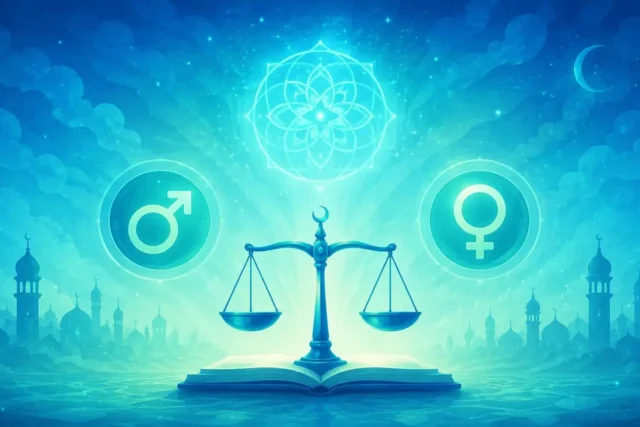
Key Takeaways The Quran affirms the complete spiritual equality of men and women before Allah — both are equally accountable and equally rewarded for righteous…
Browse our complete collection of articles across all categories and topics.
384 articlesKey Takeaways The Quran affirms the complete spiritual equality of men and women before Allah — both are equally accountable and equally rewarded for righteous…
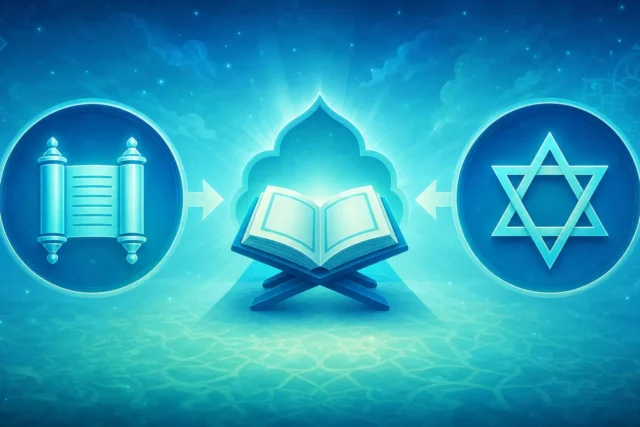
Key Takeaways The Quran acknowledges that Allah sent prophets and scriptures to all nations before the final revelation of Islam. Islam recognizes the original Judaism…
Key Takeaways The Quran prohibits alcohol through a gradual three-stage revelation, culminating in a complete and permanent ban. Allah describes alcohol as containing both benefit…
Key Takeaways The Quran addresses same-sex acts through the detailed account of Prophet Lut (peace be upon him) and his people, across multiple surahs. The…
Key Takeaways The Quran establishes the full spiritual equality of women and men before Allah, with identical rewards and accountability for righteous deeds. Women’s rights…
Key Takeaways Every alleged scientific error in the Quran dissolves under careful linguistic and contextual analysis rooted in classical Islamic scholarship. The Quran’s descriptions of…
Key Takeaways The Arabic word kāfir (كافر), often translated as “infidel,” derives from the root k-f-r, meaning “to cover” — one who covers or conceals…
Key Takeaways The Quran establishes a clear framework for treating non-Muslims based on justice, fairness, and the recognition of their humanity. Muslims are commanded to…
Key Takeaways The Quran is the verbatim word of Allah, revealed to Prophet Muhammad (PBUH) as the primary and supreme source of guidance for all…
Key Takeaways The Quran is the direct, preserved word of Allah revealed to Prophet Muhammad (PBUH) and serves as the primary guide for every dimension…
Key Takeaways The Quran contains 114 chapters (Surahs), each composed of individual verses called Ayat, revealed to Prophet Muhammad (PBUH) over approximately 23 years. Surahs…
Key Takeaways The Quran does not contain the Old Testament. Muslims believe Allah revealed the Torah (Tawrah) to Prophet Musa (Moses) and the Psalms (Zabur)…
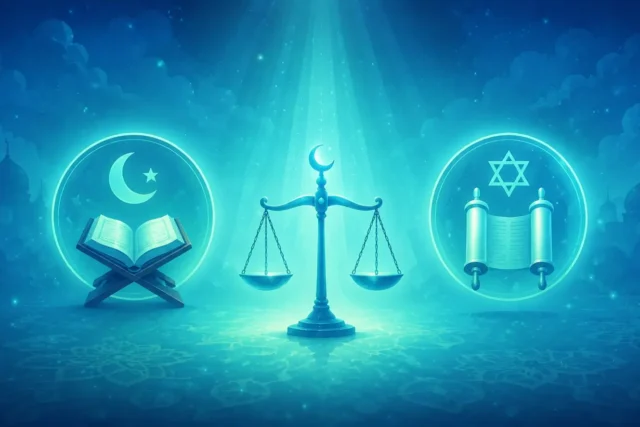
Key Takeaways The Quran is the final, preserved word of Allah revealed to Prophet Muhammad (PBUH), while the original Torah was revealed to Prophet Musa…
Key Takeaways The Quran is the direct, verbatim word of Allah revealed to Prophet Muhammad (PBUH) over approximately 23 years, preserved without alteration to this…
Key Takeaways The Quran was revealed to Prophet Muhammad (PBUH) between 610 CE and 632 CE and was fully compiled into a single written volume…
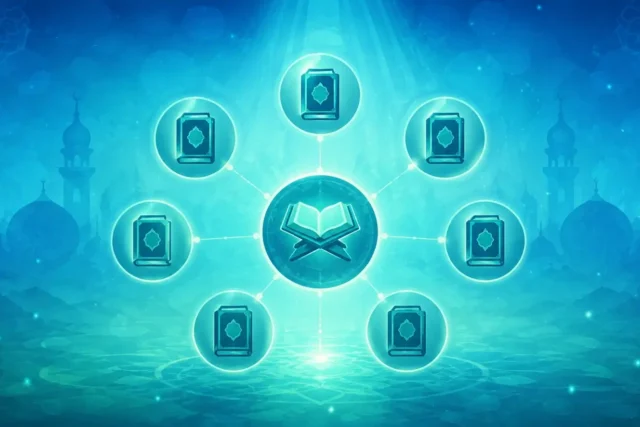
Key Takeaways There is only one Quran — the same text preserved unchanged since its revelation to Prophet Muhammad (PBUH) over 1,400 years ago. What…
Key Takeaways The Quran was revealed to Prophet Muhammad (PBUH) over approximately 23 years, beginning in 610 CE in the Cave of Hira near Mecca.…
Key Takeaways The Quran is the direct word of Allah, revealed to Prophet Muhammad (PBUH) through the Angel Jibreel (Gabriel) over approximately 23 years. The…
Key Takeaways The Quran was revealed to Prophet Muhammad (PBUH) in Arabic over approximately 23 years, from 610 CE until his death in 632 CE.…
Key Takeaways The Night Journey (Al-Isra’ wal-Mi’raj) was a miraculous physical and spiritual journey granted to Prophet Muhammad (PBUH) by Allah, affirmed in the Quran…
Key Takeaways Islam is built on pure monotheism — the absolute oneness of Allah — while Hinduism embraces polytheism, with many deities worshipped across its…
Key Takeaways Judaism began on pure monotheism — the same Abrahamic foundation as Islam — but its accumulated theological layers include grave deviations: anthropomorphism, tribal…
Key Takeaways Islam is a divinely revealed religion with the Quran as its authenticated scripture, while Buddhism is a human philosophical system with no claim…
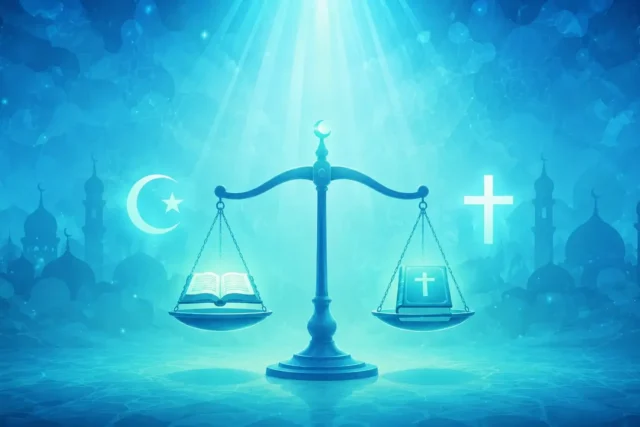
Key Takeaways Islam and Christianity are the world’s two largest religions, together accounting for more than half of the global population, yet they differ fundamentally…
Key Takeaways The Sunni–Shia split originated from a political dispute over leadership succession after the Prophet Muhammad (PBUH), but the differences between the two have…
Key Takeaways Sufism emerged in early Islamic history as a movement emphasizing spiritual purification, but the term “Sufi” was not used during the Prophet’s (PBUH)…
Key Takeaways Most humanists do not believe in God; secular humanism explicitly rejects theism and grounds morality in human reason alone. Humanism places humanity at…
Key Takeaways The belief in the existence of only one god is called Tawhid in Islam, and it is the absolute foundation upon which every…
Belief in one God — Tawhid — is the axis around which everything in Islam revolves. Every act of worship, every moral commitment, every aspiration…
There are questions every human heart eventually asks: Is there something greater than me? Is anyone truly aware of my condition? These are the questions…
Explore the teachings of Islam, the message of the Qur'an, and the life of Prophet Muhammad — through carefully curated articles sent directly to you.
No spam, just wisdom. Unsubscribe at any time.
You can ask any question without judgment. Start a private and respectful conversation whenever you are ready.